
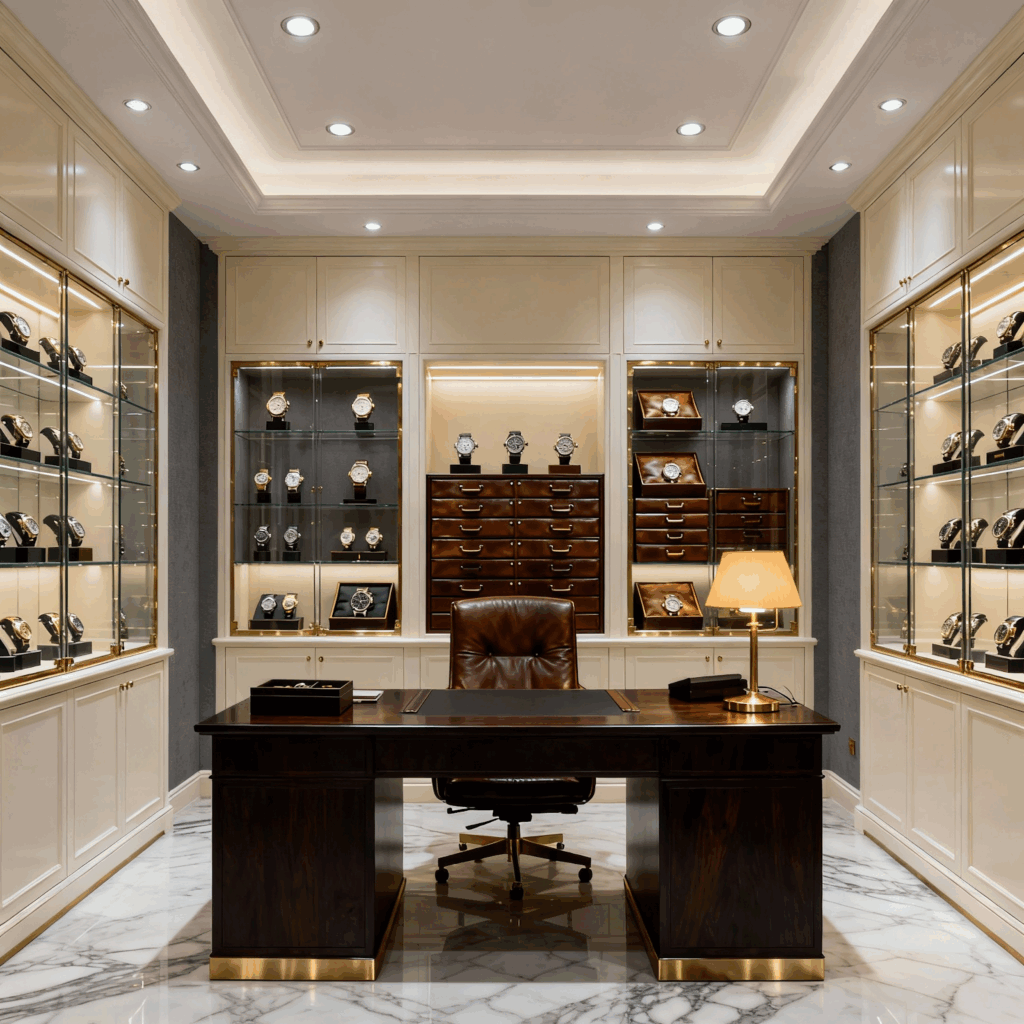
Then: Watches lived in dresser drawers. Now: Serious collectors commission custom architectural millwork rivaling wine cellars in complexity.
Then: Watch boxes gathered dust in closets. Now: Backlit display cases anchor home office focal walls.
Then: Security meant a bedroom safe. Now: Climate-controlled rooms feature biometric access and integrated alarm systems.
The relationship between luxury watch collecting and residential architecture has evolved from incidental coexistence to deliberate integration. When homeowners consult with reputable luxury watch dealer for collection building and display planning or work alongside authorized luxury watch dealer for architectural integration consulting, they’re recognizing that six-figure timepiece collections deserve design consideration matching the homes housing them. This intersection between horology and architecture represents a fascinating microcosm where craftsmanship, investment strategy, and spatial design converge in surprisingly personal ways.
The transformation reflects broader shifts in how affluent collectors view their acquisitions. Understanding how modern collectors approach luxury watch sales and value reveals the strategic thinking informing collection development. Similarly, Azure Magazine’s exploration of architecture-inspired timepieces demonstrates the reciprocal relationship where architectural principles influence watch design while watch collections inspire home architecture.
What follows examines this evolution through contrasts revealing how much has changed.
Storage Philosophy: Hidden vs. Highlighted
Traditional approach: Watches stayed concealed in safes or bedroom vaults, accessed only when needed, secured like financial documents rather than displayed like appreciated objects.
Contemporary integration: Custom millwork transforms watches into rotating exhibitions. Glass-front cabinets with museum-quality lighting showcase collections as functional art. Some collectors install entire rooms dedicated to timepiece display, featuring:
Temperature and humidity controls maintaining optimal preservation conditions. Motorized watch winders keeping automatic movements running when not worn. Modular display systems accommodating collection growth without architectural reconstruction. LED lighting programmed to simulate natural daylight cycles without UV damage.
The shift from concealment to celebration reflects changing attitudes about wealth display and the recognition that watches represent more than financial assets. They’re conversation pieces, mechanical marvels, and design achievements deserving presentation matching the architectural care lavished on libraries or wine cellars.
Security Integration: Obvious vs. Invisible
Traditional approach: Bulky safes dominated closets. Keypads and combination locks announced “valuables here” to anyone entering bedrooms. Security felt separate from design, an unfortunate necessity compromising aesthetics.
Contemporary integration: Biometric scanners hidden in architectural details. Pressure-sensitive flooring triggering silent alarms. Glass that appears standard but resists forced entry. Display cases wired directly to monitoring services. Security becomes invisible, integrated into architecture so seamlessly that admirers appreciate collections without consciously noticing protective systems.
Architects collaborating with security specialists create solutions where protection enhances rather than compromises design. Bullet-resistant glass appears identical to standard glazing. Reinforced cabinetry looks like beautiful millwork. Motion sensors integrate into lighting systems. The goal becomes securing collections without broadcasting their presence or creating fortress-like environments that undermine residential comfort.
Location Strategy: Private vs. Public
Traditional approach: Watch collections stayed in master suites, private spaces where owners dressed each morning. Collections remained personal possessions rarely shared beyond immediate family.
Contemporary integration: Dedicated watch rooms occupy prominent locations. Home offices feature display walls visible during video calls, subtly communicating success and taste. Libraries include glass-front cabinets where timepieces share space with rare books, both representing collected knowledge and craft.
Some collectors create gallery spaces where watches anchor broader collections including automotive memorabilia, photography, or contemporary art. The watch collection becomes central to home narratives about appreciation for engineering, design, and craftsmanship across disciplines. Guests tour these spaces as they might wine cellars or home theaters, the architecture designed specifically to facilitate sharing rather than concealment.
Lighting Approach: Functional vs. Theatrical
Traditional approach: Overhead bedroom lighting or small safe lights provided basic illumination adequate for selecting which watch to wear but offering no drama or visual impact.
Contemporary integration: Layered lighting systems featuring adjustable color temperature, programmable scenes highlighting specific pieces, and dynamic options creating visual interest through rotation. LED strips along shelving edges create halo effects. Fiber optic points create sparkle effects on metal and crystal. Some systems sync with home automation, adjusting throughout the day to maintain consistent visual presentation despite changing natural light conditions.

The theatrical approach transforms watch viewing from quick selection into genuine appreciation. Collectors program “showcase mode” for entertaining, where lighting sequences highlight collection highlights while dimming background pieces. Museum-quality lighting eliminates glare while maximizing the visual impact of polished cases, colored dials, and intricate movements visible through exhibition casebacks.
Climate Control: Neglected vs. Engineered
Traditional approach: Watches lived in whatever conditions dominated bedrooms. Summer heat, winter dryness, and humidity fluctuations all affected delicate mechanical movements and leather straps without conscious consideration.
Contemporary integration: Dedicated HVAC zones maintaining precise temperature and humidity levels. Sealed display cases creating microenvironments independent of room conditions. Dehumidification systems protecting against moisture damage. Temperature monitoring alerting owners to condition changes risking collection damage.
The engineering reflects understanding that mechanical watches contain lubricants affected by temperature extremes and gaskets damaged by low humidity. Collectors investing hundreds of thousands in timepieces recognize that climate control expenses pale compared to service costs or damage from environmental neglect. The architecture accommodates this reality through systems maintaining ideal conditions as automatically as they regulate living space comfort.
Display Philosophy: Quantity vs. Curation
Traditional approach: All watches together in one location, organized by acquisition order or brand, emphasizing ownership over presentation. The goal was secure storage rather than thoughtful display.
Contemporary integration: Curated presentations rotating pieces seasonally. Some watches displayed prominently while others rest in climate storage. Collections organized thematically, by complication, era, or design movement. Display decisions made deliberately, considering visual impact, story potential, and how pieces relate to surrounding architecture.
The curatorial approach treats watch collections like art collections, where not everything hangs simultaneously. Rotation keeps displays fresh while reducing wear from constant winder operation. Seasonal swaps, like changing wardrobe, bring different pieces forward as weather and occasions shift. The architecture accommodates this fluidity through flexible systems supporting various display configurations without requiring reconstruction.
Investment Consideration: Sentimental vs. Strategic
Traditional approach: Watches purchased for personal enjoyment, worn until obsolete or broken, replaced as needed. Collections accumulated accidentally rather than deliberately, driven by moment-to-moment preferences rather than long-term strategy.
Contemporary integration: Collection development following deliberate acquisition strategies. Pieces selected for appreciation potential alongside personal appeal. Architectural investments in storage and display reflecting recognition of timepieces as alternative assets deserving professional-grade housing. Some collectors maintain detailed inventories, insurance documentation, and provenance records, the architecture supporting this administrative aspect through dedicated office spaces equipped for collection management.
The strategic approach doesn’t eliminate emotional connection but recognizes that six-figure collections represent substantial wealth concentration deserving sophisticated planning. Architecture supporting this includes spaces for research, authentication verification, and consultations with dealers and auction specialists. The home becomes platform not just for enjoying watches but for managing them as portfolio components.
Technology Integration: Separate vs. Synchronized
Traditional approach: Watches and smart homes existed independently. Security systems operated separately from home automation. Lighting and climate control required manual adjustment. Technology and tradition stayed distinctly separate.
Contemporary integration: Voice-activated display lighting. Automated winders integrated into home power management. Security systems sending smartphone alerts about unauthorized access. Environmental sensors logging temperature and humidity data accessible remotely. Virtual inventory systems cataloging collections with high-resolution photography and blockchain authentication.
The technology integration serves watches rather than replacing them. Unlike smart watches making mechanical timepieces obsolete, smart home systems create ideal environments for traditional horology. The architecture incorporates infrastructure supporting this integration through comprehensive low-voltage wiring, dedicated circuits preventing power fluctuations, and network capabilities enabling remote monitoring and control.
Social Dimension: Solitary vs. Communal
Traditional approach: Watch collecting remained private hobby. Acquisitions shared with fellow collectors at specialty stores or occasional meetups. Collections stayed personal, rarely displayed socially.
Contemporary integration: Home watch rooms become entertaining spaces. Collectors host informal gatherings where enthusiasts examine pieces, discuss market trends, and share acquisition stories. The architecture facilitates this social dimension through comfortable seating, proper viewing lighting, and spatial layouts encouraging conversation around displayed collections.
Some collectors create tasting-room experiences where guests sample pieces from the collection, literally trying watches under supervision within designated spaces designed for this purpose. The architecture supports these interactions through secure yet accessible display systems, adequate table surfaces for examination, and lighting enabling detailed inspection. The home becomes venue for the watch community, blending private collection with semi-public appreciation.
Future Considerations: Static vs. Adaptive
Traditional approach: Watch storage installed once, expected to serve indefinitely without modification. Display solutions picked based on current collection, with little thought toward future growth or changing interests.
Contemporary integration: Modular systems accommodating collection evolution. Display capacity exceeding current needs, anticipating growth. Architectural infrastructure supporting future technology integration not yet defined. Electrical, data, and structural elements oversized deliberately, creating flexibility for unknown future requirements.
The adaptive approach recognizes that serious collections rarely stay static. New acquisitions, dispositions, and shifting interests all demand flexible architecture. Smart collectors work with architects who build in expansion capacity and modification flexibility rather than custom solutions perfectly fitting present needs but resisting future change. The investment in adaptability proves worthwhile as collections evolve, preventing expensive architectural modifications to accommodate different display requirements.
What emerges from these contrasts reveals more than changing storage solutions for expensive accessories. The integration of watch collecting into residential architecture reflects broader cultural shifts around luxury, display, and the relationship between private passion and public sharing. Collections once hidden now anchor architectural experiences, their display receiving design attention historically reserved for libraries or wine cellars.
For architects working with serious watch collectors, understanding this evolution proves essential to creating homes that serve collections properly. The mechanical precision and aesthetic sophistication embodied in haute horology deserve architectural responses matching their quality. When successful, these integrations create homes where time itself becomes architectural element, measured not just by clocks but by the beautifully engineered mechanisms receiving the presentation they deserve.
More Stories
How to Set Up a Home Office That Supports a Fully Remote Workflow
7 Things to Know Before Booking Bed Bug Heat Treatment
How does Attic Air Leakage Affect Heating and Cooling Load Balance?