
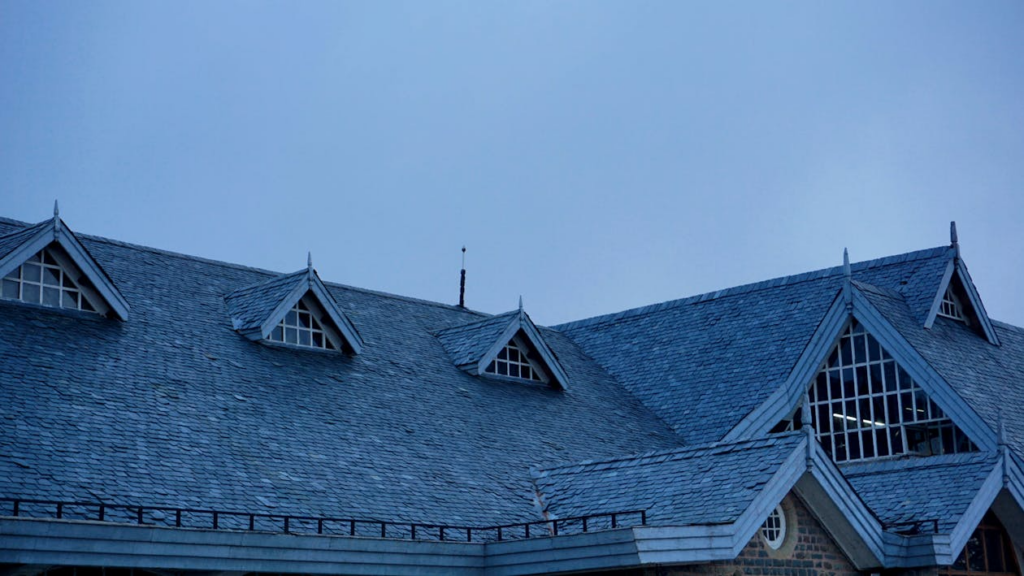
Roof pitch determines how the roof will function and its required level of maintenance throughout its lifetime. Before choosing any upgrades, you should use a roof pitch calculator to confirm your slope and convert your measurements into the units that roofing manufacturers and contractors typically use. Below are five examples of how the angle of your roof can impact your home building project:
The type of roofing material selected
Roofing materials should be selected based on the slope of the roof. Different materials are made to perform best within specified ranges of slopes. Asphalt shingles, for example, are designed to use gravity to drain water from the roof, and they will perform best at moderate slopes.
On the other hand, metal roofing panels can be installed at low-sloped roofs, provided the seams and underlayment are appropriately designed and built. Tile and slate require steeper-slope roofs to prevent water from entering the building and damaging the roof.
Roof Windows and Skylights
Proper draining of water from around skylight frames greatly relies on the slope of the roof. Most skylight models will have specific slope ranges and are packaged with specific flashing kits. On roof types with very little slope, standing water/debris collects around a skylight which increases the chances of leaking due to the added weight.
Improper flashing on a steeply pitched roof means water will enter through wind and rain. Also, stains or water marks on your ceiling interior and condensation build-up are maintenance indicators that the pitch of your roof did not match with the appropriate skylight system. Use a roof pitch calculator to ensure your roof doesn’t get in the way of your vision.
Installation of Solar Panels
Another area that is affected by the pitch of the roof is the efficiency and installation of solar panels. Moderate pitched roofs allow solar panels to be mounted face/flat against the roof, giving the panels optimal efficiency. Very low or steep pitched roofs may require the use of tilt racks or other specialty mounting. When the pitch of the roof is not taken into account, it can lead to water collecting around the mounts or additional structural stress due to the excess weight from the tilt.
If your solar panels underperform after storms or if there is excessive debris that has accumulated behind your panels, it could be an indication of an improper mounting angle or water drainage issue related to the slope of your roof.
Green Roofs and Low-Slope Waterproofing
A green roof will act differently than a traditional pitched roof. A couple of factors are at play. First, with a traditional pitched roof, water moves quickly down the slope to the ground and is subsequently drained through a drainage hole at the bottom (or gutter) of the roof structure.
Because a green roof holds onto water, it does not allow for this speed of water movement across the roof surface. Because of this, it’s essential to use a waterproofing system with adequate drainage capabilities.
Dormers, Loft Conversions, and Rooftop Decks
The amount of slope your roof has will greatly affect your ability to add another living space above the main area of your house. A steep slope will create headroom in the attic and allow for added storage space. Low sloped roofs are generally not designed for living space on top but can be configured to support the additional weight as long as there is a sufficient drainage design to handle all the extra loads.
Endnote
Careful consideration of roof pitch when creating plans for a new roof system will ensure that the roof system is both practical and safe for its intended use over time. A roof with an incorrect slope may lead to future problems that could have been avoided through testing prior to the design or construction phases.
More Stories
Avoid Common Mistakes When Choosing Roof-Only Insulation Solutions
Mistakes Purchasers Make When Choosing Property Developers in the UAE
Through the Lens: Capturing Toronto’s Custom Home Evolution