
The traditional housing market is leaving many prospective buyers behind. Finding an affordable home has become a frustrating process defined by skyrocketing prices, intense bidding wars, and long construction delays. Middle-income earners are frequently priced out of neighborhoods they want to live in, forcing a re-evaluation of what homeownership actually looks like.
This widespread frustration is fueling a massive shift toward alternative housing solutions. People are realizing that massive mortgages and sprawling square footage do not equate to a better quality of life. Instead, buyers are embracing compact, factory-built homes as a highly accessible and pragmatic alternative. The data supports this rapid transition, as the global tiny homes market is projected to grow from $1.42 billion in 2026 to $1.79 billion by 2031.
Why Buyers Are Rethinking Square Footage
The realities of the current housing crisis are impossible to ignore. For years, the standard goal was to buy the largest house you could possibly afford. Today, traditional site-built homes carry crippling hidden costs that lock middle-income earners out of homeownership entirely. These expenses go far beyond the initial down payment, extending into high property taxes, massive utility bills, and constant upkeep.
Buyers are actively pushing back against this financial strain. A recent industry survey highlights this changing mindset, showing that 73% of Americans surveyed stated they would consider living in a tiny home to combat high housing costs. People are tired of working simply to pay off a mortgage. They want financial flexibility, and downsizing is the most effective way to achieve it.
This shift is rooted in practical economics rather than just a minimalist lifestyle trend. In fact, approximately 64% of buyers choose tiny and compact homes because both the purchase price and the ongoing maintenance costs are significantly lower than those of conventional houses. Lower square footage means fewer materials, less labor, and a drastically reduced financial barrier to entry.
As traditional real estate prices continue to climb, buyers are turning to factory-controlled construction to achieve homeownership without the financial strain. By choosing to explore modular homes with prices that reflect real delivered costs, you can find an option that does not sacrifice durability, energy efficiency, or modern comfort. The predictability of this approach is giving a new generation the confidence to invest in their own property.
Factory-Built vs. Site-Built
Understanding the modern compact home requires a clear look at how they are actually built. Traditional site-built homes are constructed entirely on the property. This exposes the raw materials to rain, snow, and fluctuating temperatures for months, which can lead to warped lumber and delayed schedules.
Factory-built housing eliminates these environmental risks entirely. Manufactured homes, often referred to as single-wides or double-wides, are built entirely inside a climate-controlled factory on a permanent chassis. They are constructed to strict federal HUD codes, ensuring safety and energy efficiency. Modular homes are also built in factory sections, but they are transported to the site and assembled on a permanent foundation, adhering strictly to your local state and county building codes.
There is a lingering misconception that factory-built means lower quality. The reality is that precision-built quality with factory-controlled construction often rivals or even exceeds traditional building standards. Every stage of the build is subjected to rigorous quality assurance checks before the home ever leaves the facility. Materials are cut with absolute precision, and assembly lines ensure consistent craftsmanship that is difficult to replicate on a muddy job site.
The most distinct advantage of the factory approach is the incredible speed of delivery. Research indicates that modular techniques can accelerate end-to-end project timelines by 20 to 50 percent while simultaneously reducing costs by up to 20 percent. Avoiding weather delays, scheduling conflicts with subcontractors, and material shortages guarantees vastly faster move-in times for eager buyers.
Unpacking the Long-Term Cost and Energy Benefits
The financial advantages of a compact home extend well beyond the initial purchase price. One of the most significant benefits is the concept of true factory-direct pricing. When you buy directly from a manufacturer, you bypass the heavy markups typically added by real estate developers and traditional contractors.
Upfront, localized pricing models also help buyers accurately anticipate their total project costs. Instead of dealing with surprise invoices midway through a build, you can clearly map out the expenses for site preparation, land leveling, and utility hookups. This transparency allows you to secure appropriate financing without the stress of an expanding budget.
Once you move in, the energy savings become immediately apparent. Smaller footprints require significantly less energy to heat in the winter and cool in the summer. Studies confirm that compact homes can reduce utility consumption by up to 45% due to their smaller, tightly insulated spaces. Modern factory builds use advanced insulation techniques that keep indoor temperatures highly regulated.
Smaller homes naturally lead to lower long-term maintenance needs and reduced property taxes. A smaller roof costs less to repair, and a compact HVAC system is much cheaper to service than a massive central unit. The table below illustrates the estimated monthly savings you can expect when choosing a compact footprint over a traditional build.
|
Expense Category |
Traditional Home (2,000 sq. ft.) |
Factory-Built Home (600-900 sq. ft.) |
|
Estimated Monthly Heating & Cooling |
$180 – $300 |
$60 – $120 |
|
Routine Maintenance & Repairs (Monthly Avg.) |
$250 – $400 |
$75 – $150 |
|
Overall Energy Waste Potential |
High (Unused rooms, drafts) |
Low (Centralized, highly insulated) |
|
Property Tax Impact |
High (Based on large footprint) |
Low (Based on smaller footprint) |
Smart Design: Customization and the Rise of ADUs
Maximizing Space Without Sacrificing Comfort
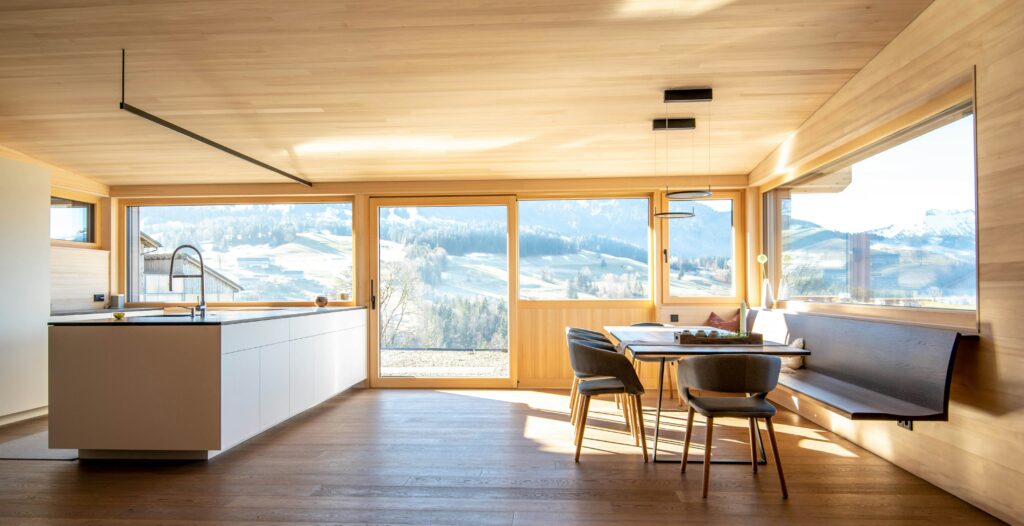
Downsizing your living space does not require you to abandon modern comforts or premium finishes. Today’s compact homes are masterclasses in smart, intentional design. Builders optimize every single square foot, ensuring that a smaller home feels open, breathable, and highly functional.
Buyers have the freedom to customize flexible floorplans to maximize efficiency based on their specific lifestyle. Whether you are looking at an ultra-compact 0–600 sq. ft. layout or a slightly larger 600–900 sq. ft. model, you can select features like vaulted ceilings, large windows, and multi-purpose built-in storage. These design choices draw the eye upward and outward, making the interior feel significantly larger than its actual footprint.
This flexibility is also driving the massive popularity of the Accessory Dwelling Unit (ADU). An ADU is a secondary, self-contained housing unit located on the same lot as a primary single-family home. They are the perfect solution for families navigating multi-generational living, providing aging parents or adult children with independence and proximity. Alternatively, homeowners frequently use ADUs to generate a reliable secondary rental income.
The process of designing these spaces has also become remarkably user-friendly. Modern virtual buying experiences, such as interactive 3D tours, allow buyers to remotely explore and customize layouts for a completely hassle-free experience. You can walk through a digital model of your future home, swap out cabinet finishes, and adjust wall placements from your current living room before finalizing your factory order.
Conclusion
The transition toward compact living is a practical, durable response to modern housing challenges. The current real estate market is simply too expensive and unpredictable for many aspiring homeowners. By embracing smaller footprints and factory-built quality, buyers are reclaiming their financial independence and securing stable, long-term housing.
Choosing a factory-built home offers tremendous, tangible benefits. You escape the inflated costs of traditional real estate, drastically reduce unpredictable move-in times, and secure a highly energy-efficient property that is cheap to maintain. You get the exact home you want without the stress of managing a chaotic, weather-dependent construction site.
More Stories
Planning Plumbing Access Before Closing Walls in a Renovation
How to Read a Cabinet Spec Sheet: A Term-by-Term Translation
How to Compare Available Apartments Before Making a Decision