
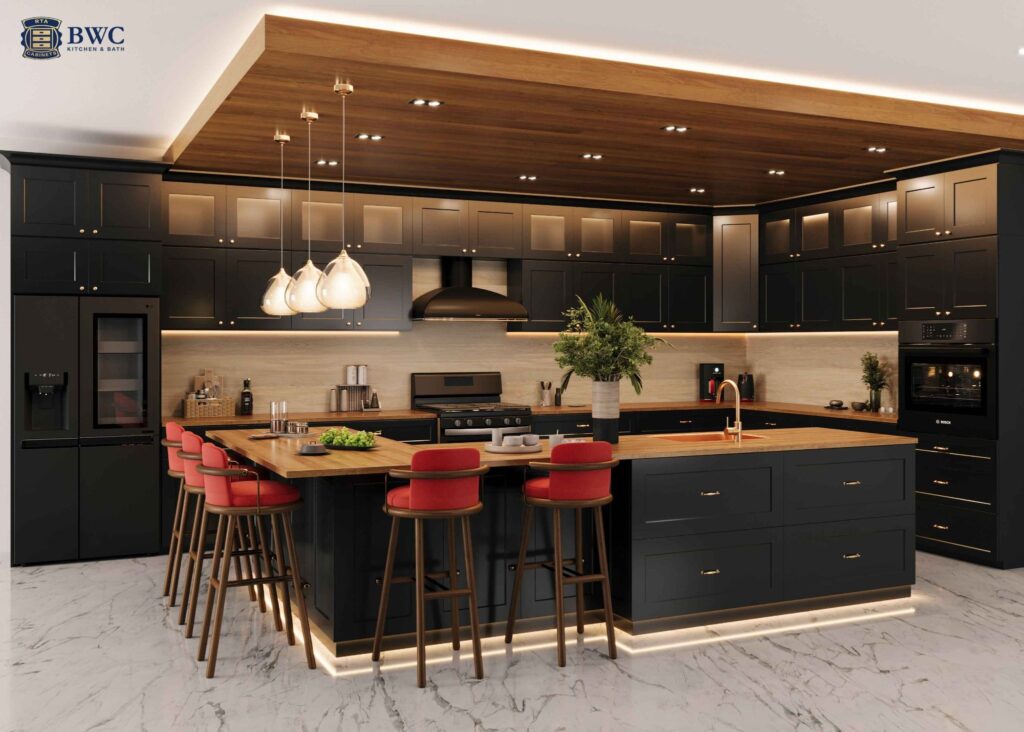
Put two cabinet quotes side by side and the prices might differ by half, while the product photos look nearly identical. The reason for the gap is almost never visible in the photo. It is buried in the spec sheet, in a short list of terms like “3/4-inch plywood,” “dovetail drawer box,” “undermount soft-close glides,” and “catalyzed finish,” that mean a great deal to the cabinet’s lifespan and almost nothing to a shopper who has not been taught to read them.
Learning to read that list is the whole skill of buying cabinets well. A finish and a door style you can judge with your eyes; construction quality you can only judge from the spec sheet. The short version: check the box material (plywood, not particleboard), the drawer joinery (dovetail), the glides and hinges (undermount, full-extension, soft-close), and the finish process (catalyzed or baked), and two near-identical quotes resolve into a clear difference.
Cabinet Box Material: Plywood vs. Particleboard
The first thing to find is what the cabinet box, the structural shell, is built from. The spec will name a material, and the material tells you most of the durability story.
“Plywood” is the answer you want. Plywood is thin wood veneers cross-laminated in layers, which makes it strong, resistant to sagging under a load of dishes, and, critically, far more tolerant of moisture than the alternatives. A spec may go further and say something like “1/2-inch 7-ply,” which tells you both the thickness and the number of layers, more plies generally meaning a stronger, more stable panel. “Particleboard” or “MDF,” by contrast, are engineered wood products that cost less but swell and lose their grip on screws when they get wet, a real liability in a room with a sink, a dishwasher, and regular spills. If the box material is not stated at all, that silence is itself a flag worth questioning.
Drawer Box Construction: Why Dovetail Joints Matter
If you read only one line on a spec sheet, read the drawer box, because it is the most reliable tell of overall quality. Drawers take more repeated stress than any other moving part, so how they are joined exposes how seriously the whole cabinet was built.
“Dovetail” is the gold standard. A dovetail joint interlocks the drawer sides with wedge-shaped cuts that cannot pull apart under the daily stress of opening a loaded drawer, no fasteners required to hold it together. A spec that says “solid-wood dovetail drawer box” is telling you the maker did not cut corners where corners are most often cut. The weaker answers are drawers “stapled” or “glued” or made of thin engineered board, which loosen and rack over years of use. A line that fits dovetail drawers usually applies the same care everywhere else, which is why this one line predicts the rest.
Cabinet Hardware: Undermount Glides and Soft-Close Hinges
Next come the moving parts. Two terms recur. “Undermount glides” sit beneath the drawer rather than on its sides, which hides the hardware and usually means a smoother, full-extension pull that lets you reach the very back of the drawer. “Full-extension” is the phrase to want, it means the drawer comes all the way out, unlike older glides that stop short and strand the back third in a dark cavity.
“Soft-close” appears on both hinges and glides, and means a damping mechanism eases the door or drawer shut instead of letting it slam. Beyond the pleasant feel, soft-close hardware survives daily use far better than cheap hinges that loosen and sag. The detail to watch is whether soft-close is listed as standard or as a paid upgrade. When it costs extra, the savings often came from somewhere less visible.
Cabinet Finish: Why the Curing Process Matters
Finish specs get read for color and rarely for the word in front of it, which is the word that matters for durability. “Catalyzed” or “baked” or “conversion varnish” all describe a finish cured hard, so it resists the chipping at edges and corners that makes a kitchen look tired early. A finish described only by its color, with no curing process named, may be air-dried and softer, more prone to early wear. On unfinished cabinets the spec instead tells you the wood species you will be priming and painting yourself, which is its own kind of useful.
How to Read a Cabinet Spec Sheet at a Glance
Read enough spec sheets and a pattern emerges: the good ones are specific, and the specificity is the signal. A listing that states, for instance, a 1/2-inch plywood box, a solid-wood dovetail drawer box, and undermount soft-close glides is handing you the durability markers in plain sight, the way a clear plywood cabinet construction spec does, and notably these same markers appear whether a cabinet is sold as custom, semi-custom, or ready-to-assemble, because construction quality is a function of materials and joinery, not of the sales channel. A spec sheet that stays vague, naming a color and a style but going quiet on box material, drawer joinery, and finish process, is often vague for a reason. The terms it omits are usually the ones it would rather you not compare.
Frequently asked questions about cabinet construction
What does “plywood box” mean and why does it matter? The cabinet’s structural shell is made of cross-laminated wood veneers, which hold screws well, resist sagging, and tolerate kitchen moisture far better than particleboard or MDF. It is the benchmark material for a durable box.
Why is the drawer box the most important spec line? Drawers take the most repeated stress, so their joinery reveals overall build quality. “Dovetail” joints interlock and hold without relying on fasteners, while stapled or glued drawers loosen over time. A line that uses dovetails usually builds the rest carefully too.
What do “undermount” and “full-extension” mean on glides? Undermount glides sit below the drawer for a cleaner look and smoother action; full-extension means the drawer pulls all the way out so the back is reachable, rather than stopping short and stranding contents in a deep cavity.
Is soft-close worth looking for? Yes. Beyond easing doors and drawers shut, soft-close hardware outlasts cheap hinges that sag and loosen. Check whether it is standard or a paid upgrade, since charging extra for it can signal economizing elsewhere.
Why does the finish term matter more than the color? A “catalyzed” or “baked” finish cures hard and resists the edge-chipping that ages a kitchen early. A finish named only by color, with no curing process stated, may be softer and wear sooner.
A spec sheet is not marketing copy; it is the cabinet telling you what it is made of, if you know how to read it. Find the box material, read the drawer joinery, check the glides and hinges, and note the finish process, and two quotes that looked identical in the photos resolve into a clear difference in what you are actually buying. The cabinet that states all of it plainly is usually the one confident in the answers.
More Stories
Planning Plumbing Access Before Closing Walls in a Renovation
Why Compact Homes Are Growing in Popularity
How to Compare Available Apartments Before Making a Decision