
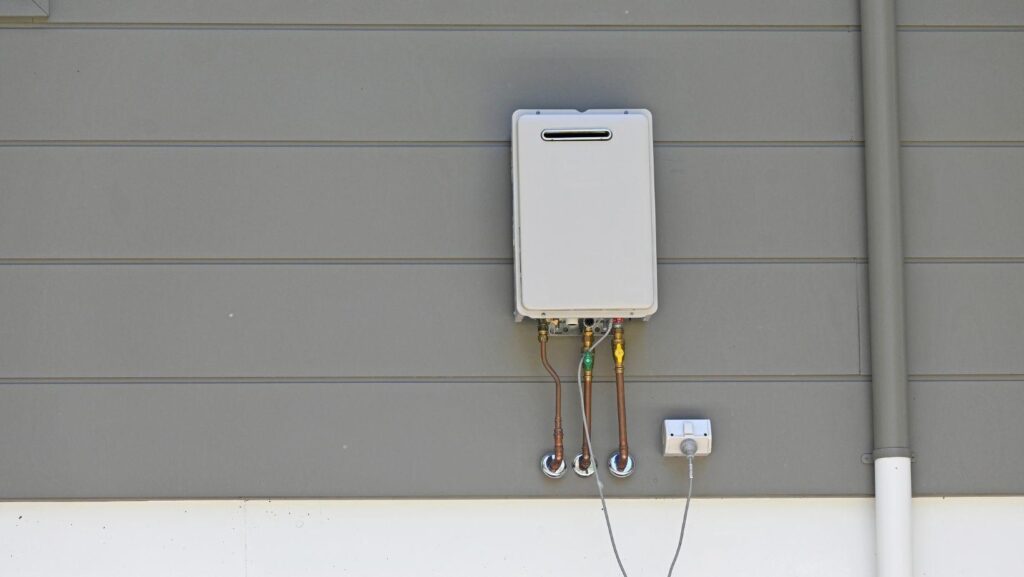
Nobody thinks about their hot water system until it stops working. Then it’s suddenly the only thing on your mind, usually at 6am, usually right when you’re already running late for work.
Here’s the thing though, most systems don’t just die overnight. They give you warnings for weeks, sometimes months, before they actually pack it in. You just need to know what those warnings look like, and more importantly, when a repair will do the job versus when hot water replacement is actually the smarter call.
Check the age first
Look for the compliance plate on your unit. It’s usually a small sticker or metal plate somewhere on the tank, showing the manufacture date or a serial number you can look up if the date’s worn off.
A standard storage tank, gas or electric, generally lasts somewhere between 8 and 12 years. Heat pump and continuous flow units tend to go longer, often 15 to 20 years if they’ve been looked after properly. Once you’re past that ten year mark, age on its own becomes a pretty strong signal that hot water replacement is coming, even if the thing still seems to work fine day to day.
Canberra’s climate doesn’t do these units any favours either. Cold winter nights put real strain on outdoor units and exposed pipes, and the summer heat wears things down in its own quieter way. It’s genuinely common to see systems here start failing a bit earlier than the manufacturer’s brochure would have you believe.
When it’s still worth repairing
If your system’s under about 8 years old, a repair is usually the right first move, not a full replacement.
A faulty thermostat is one of the more common issues, and honestly, it’s a cheap and simple fix. A worn heating element is much the same story. A dripping pressure relief valve, sometimes called a TPR valve, shows up a fair bit too, and while it doesn’t automatically mean the whole system’s failing, it’s a safety device, so it shouldn’t just be left alone either.
Gas systems occasionally have pilot light trouble, usually down to a worn thermocouple. A licensed plumber can normally sort that out in one visit without needing to go anywhere near the tank itself.
When it’s actually time to replace
Once you start noticing a few of these signs turning up together, or the same fault keeps coming back no matter what gets fixed, that’s usually the point where hot water replacement starts making more sense than throwing more money at repairs.
Rusty or discoloured water is one of the clearer signs something’s properly wrong. It often means the tank’s sacrificial anode has worn out and stopped doing its job protecting the metal. Most plumbers suggest swapping the anode every three to five years, which honestly can add a fair bit of life to an otherwise healthy tank.
Leaking is the other big one. A bit of dripping from the TPR valve now and then isn’t unusual. Water actually pooling around the base of the unit though, that’s a different story, and it almost always means the tank’s cracked somewhere inside. Once that’s happened, there’s nothing to repair. Hot water replacement is the only real option left at that point.
Water temperature swinging around mid shower, too hot then suddenly cold, is also worth paying attention to. On continuous flow systems it can just be a dirty sensor. On older storage tanks, it’s often the unit simply struggling to keep up anymore.
Then there’s the noise. A popping or rumbling sound as the tank heats up usually means sediment’s built up at the bottom. That cuts down how much usable hot water you’re actually getting, and if showers seem to be running cold faster than they used to, that’s often the same sediment problem showing itself a different way.
The rule most plumbers actually go by
If fixing the current fault costs more than half the price of a new unit, hot water replacement is nearly always the better move financially. Most experienced Canberra plumbers apply this without even really thinking about it anymore.
Constantly patching up an ageing system tends to cost more over time than people expect going in. One repair holds things together for a few months, then something else fails, and the whole cycle starts again. If a plumber’s already been out more than once for the same unit within a year, that pattern alone is usually reason enough to start seriously considering hot water replacement instead of another quick fix.
What it actually costs
Across Australia, hot water replacement generally runs somewhere between $1,000 and $7,000, depending on the type of system and how complicated the install turns out to be. A straightforward like for like swap sits toward the lower end of that. Switching over to a heat pump or continuous flow gas system, which often needs extra electrical or plumbing work done, pushes things higher.
Smaller repairs are usually a lot cheaper, often somewhere around $140 to $200 for parts and labour combined, though that number moves depending on exactly what’s actually gone wrong.
Don’t sit on a gas smell
If your system runs on gas and you pick up any smell near the unit, don’t wait around hoping it clears up on its own. Shut the gas off, get some air moving through the area, and call a licensed gas fitter before touching the system again. In the ACT, gas hot water work legally has to be done by a plumber with the right gas fitting endorsement, so this genuinely isn’t a job to guess your way through.
So what should you actually do
If your system’s still fairly young and only showing one issue at a time, try the repair first. But once a unit’s past ten years old and you’re seeing more than one warning sign together, rust, leaking, strange noises, temperature swings, it’s worth getting someone out to properly assess it rather than waiting for it to fail completely on its own schedule.
A cold shower is annoying, sure. A tank that finally gives out and floods your laundry is a whole different level of bad, and it tends to happen with barely any warning once the corrosion’s properly taken hold inside.
More Stories
The Homeowner’s Guide to Eco-Friendly Pest Control Methods
Turning a Neglected Yard Into a Resort-Style Retreat Through Smart Design
Tenant-Friendly Renovations That Preserve Safety and Livability