
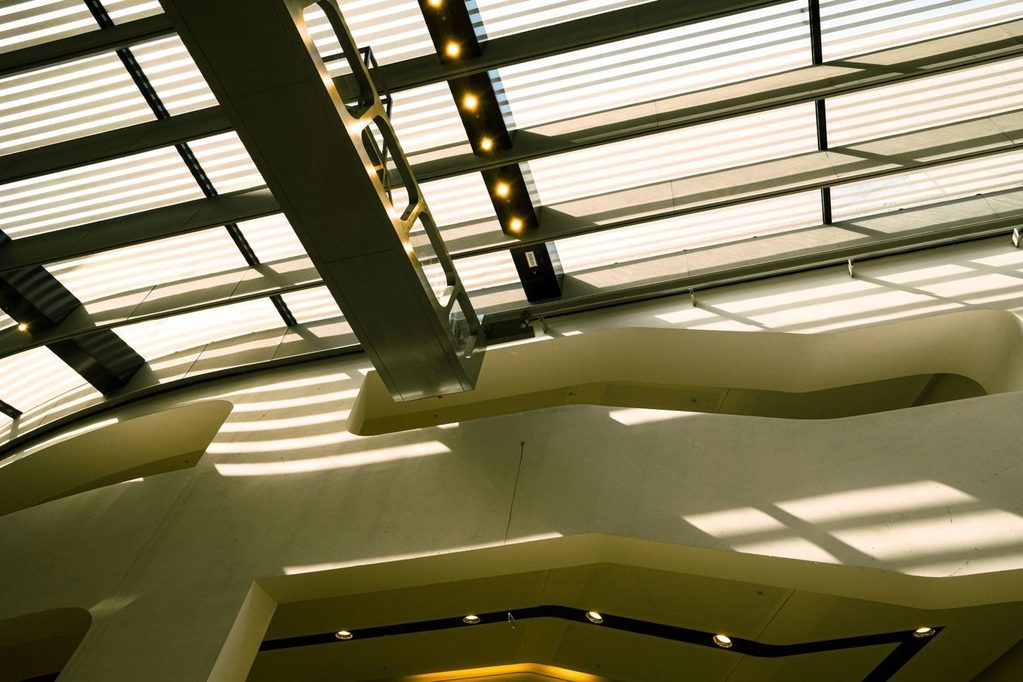
Architectural design affects much more than appearance, circulation and occupant experience. It also creates a detailed record of what a building contains. That record can become important when depreciation is analyzed for federal tax purposes. Cost segregation examines individual components within a property and assigns qualifying assets to appropriate recovery periods. The IRS’s current guidance specifically identifies architectural plans, specifications, construction drawings and as-built documents as useful evidence in a quality study.
Design documentation becomes tax evidence
If you are commissioning a California cost segregation study, your drawings and specifications can give the engineer valuable evidence about site work, hardscape, landscaping, finishes, millwork and specialty electrical components. The engineer still determines classification from the property’s actual use and applicable tax rules. Design intent provides context, while construction records connect that intent to the completed work and its costs. Keeping those records organized can make a later analysis considerably more precise.
Consider a client who acquired a California apartment building in 2019 for $5,025,781, with land valued at $3,050,449. A full engineering-based cost segregation study produced an estimated $340,955 in first-year tax savings and a 90:1 payback ratio.
Three categories, three depreciation paths
The architectural model becomes particularly useful when a project is broken into broad tax categories. Site work, hardscape and landscaping can fall into land-improvement classifications. Certain finishes, millwork and specialty electrical components can qualify as personal property when the facts support that treatment. The structure follows its applicable recovery period. A design decision alone does not determine classification; the engineer’s analysis and the property’s use do. Residential rental property generally uses 27.5 years under federal GDS, while nonresidential real property generally uses 39 years.
Accelerated deductions are not automatically usable against other income. Under IRC Section 469, losses from rental activity are generally passive, meaning they suspend and carry forward against future passive income or release on disposition, rather than offsetting wages or business income in the year they arise. At the federal level, two exceptions apply. Real Estate Professional status under Section 469(c)(7) requires more than 750 hours annually in real property trades or businesses, more than half of total working time and material participation. Separately, the short-term rental exception under Reg. 1.469-1T(e)(3)(ii)(A) applies where average guest stay is seven days or less, and the owner materially participates. California is the important exception here: the state does not conform to Section 469(c)(7), so real estate professional status does not carry over to a California return even where it is established federally. Material participation requires satisfying one of the seven tests in the regulations – most commonly the 500-hour test or the test requiring more than 100 hours with no other individual participating more.
Building systems need careful analysis
Architects can give cost segregation engineers useful detail through HVAC schedules, equipment schedules, electrical diagrams, finish schedules and record drawings. Central HVAC, plumbing, roofing, windows and the building envelope are structural components under Section 1250. Free-standing window or portable AC units can receive different treatment when the facts support personal-property classification. Building-management controls integrated into central systems do not become five-year property simply because they contain electrical components.
Accelerated depreciation is a timing benefit, not a permanent one, and the reckoning comes at sale. The 5- and 7-year personal property a study reclassifies is Section 1245 property, recaptured at ordinary income rates up to 37%. The 15-year land improvements and the building itself are Section 1250 property, where depreciation claimed in excess of straight-line is ordinary income, and the straight-line portion becomes unrecaptured Section 1250 gain, capped at 25%. Recapture can be deferred through a Section 1031 exchange. This is why hold period matters: a study generally makes sense on a three-to-five-year minimum hold and is most compelling at five years or longer.
Federal acceleration meets California rules
Federal depreciation rules changed substantially in 2025. California does not conform to the federal bonus depreciation provision, so the federal first-year deduction does not simply flow through to the California return. A California return requires an add-back and a separate state depreciation calculation.
The One Big Beautiful Bill Act, P.L. 119-21, made 100% bonus depreciation permanent for qualifying property acquired and placed in service on or after 20 January 2025, reversing the phase-down that had been stepping the rate down through 80%, 60%, 40%, 20% and finally 0%.
Why the drawings still matter years later
A completed project can remain relevant to depreciation analysis long after construction ends. For a look-back study on property placed in service in an earlier year, an eligible accounting-method change uses Form 3115 with a current-year catch-up deduction. It is not an amended return. Preserving drawings, specifications, invoices, change orders and as-built records therefore gives owners and their advisers a stronger factual record when the building’s components are reviewed years after completion.
More Stories
The Moving Challenges Homeowners Often Underestimate
InsideTheHome: FlyArchitecture—How Lightweight Design Transforms Modern Living (2026 Guide)
Lighting & Acoustics In Architecture: Analyzing Interactions For Better Spaces (ArchFlytecher Method, 2026)