
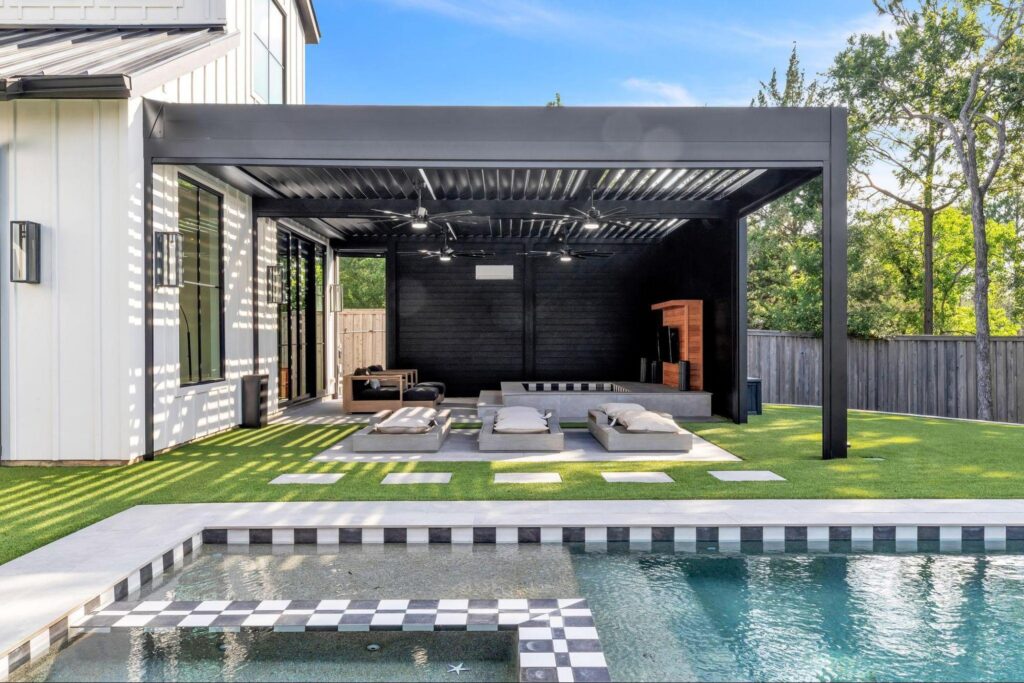
For decades, pergolas have occupied an ambiguous position in residential design. Often categorized as garden features or decorative accessories, they were rarely considered part of the home’s architectural logic. Today, that perception is shifting. As residential architecture increasingly engages with climate, comfort, and indoor–outdoor continuity, pergolas are being re-examined as performative structures, elements that actively shape environmental conditions rather than simply decorate outdoor space.
Pergolas as Intermediate Architectural Space
In architectural terms, pergolas function as threshold structures. They sit between enclosed interior space and the open landscape, mediating light, heat, and exposure. When designed intentionally, this intermediate condition allows pergolas to operate as spatial buffers, zones that reduce thermal stress on the building while expanding usable living space.
Unlike enclosed additions, pergolas preserve openness and permeability. Unlike simple shade devices, they establish spatial order. This dual role makes them uniquely suited to contemporary residential architecture, where flexibility and environmental responsiveness are increasingly valued.
By framing outdoor rooms without sealing them off, pergolas allow homes to breathe, both literally and visually.
Climate Adaptation at the Domestic Scale
Climate-responsive design is often discussed at the scale of whole buildings or urban systems, yet its principles are equally relevant at the residential level. Pergolas offer an opportunity to apply bioclimatic strategies in a way that is visible, legible, and directly experienced by occupants.
Properly oriented pergolas can:
reduce direct solar gain on adjacent glazing,
create shaded microclimates that remain usable in warmer months,
allow low-angle winter sun to penetrate outdoor spaces,
encourage natural airflow rather than trapping heat.
When integrated thoughtfully, these structures support passive comfort strategies without introducing mechanical complexity. In this sense, pergolas can be understood as micro-climate moderators, operating in concert with the home’s broader environmental strategy.
Dynamic Shading vs. Static Structures
The Limits of Fixed Pergola Design
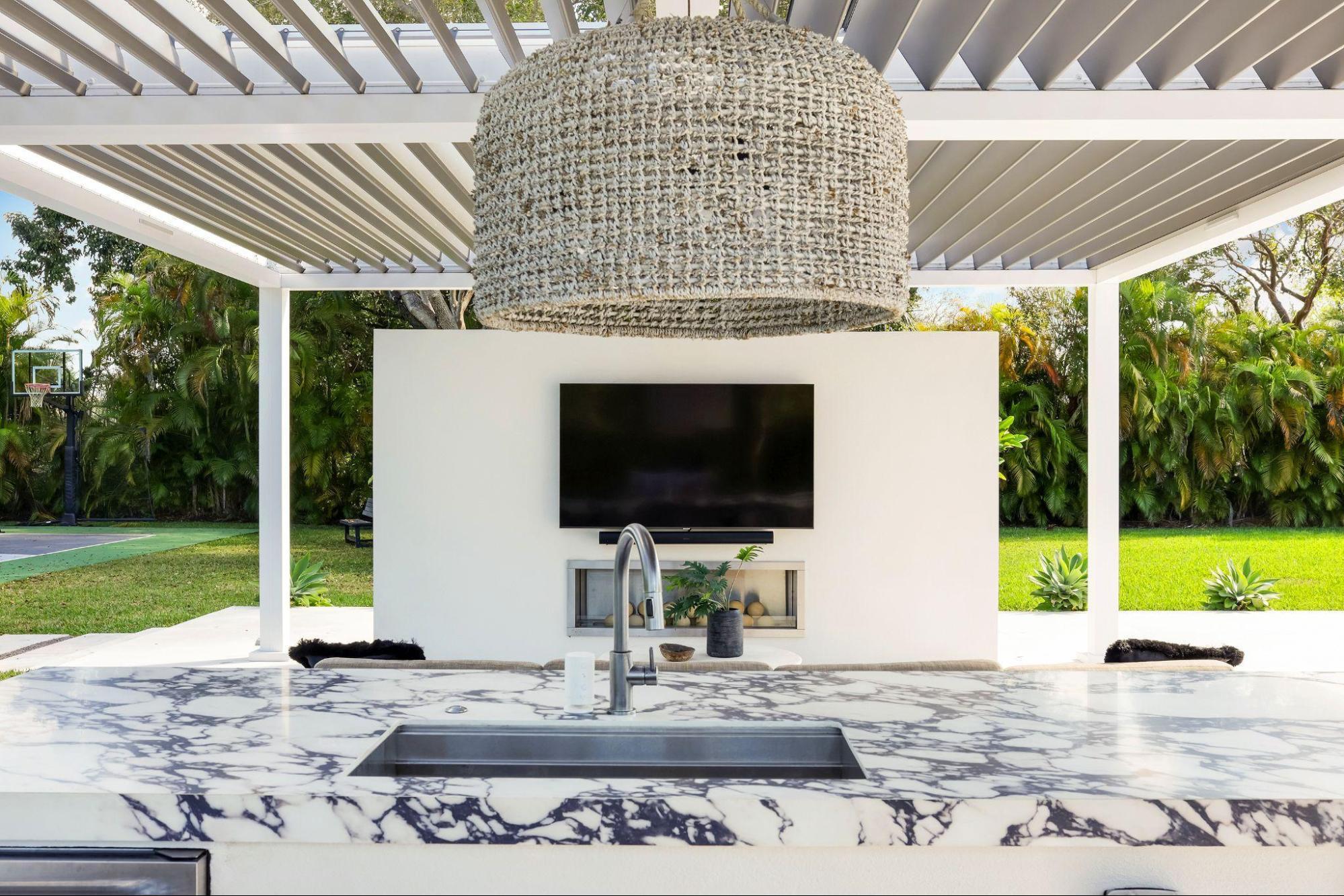
Traditional pergolas rely on fixed slats or beams to provide partial shade. While visually effective, static systems inherently represent a compromise: they are either too open during peak sun or too closed when light and warmth are desirable.
The Shift Toward Responsive Systems
Contemporary residential architecture increasingly favors dynamic systems, elements that respond to changing conditions rather than resisting them. Adjustable pergola roofs introduce this responsiveness on the domestic scale. By allowing homeowners to control sunlight, airflow, and rain protection, these systems transform pergolas from fixed objects into adaptive architectural components.
This shift mirrors broader trends in building design, where responsive façades, operable shading, and adaptable envelopes are replacing static solutions that assume uniform conditions year-round.
Bioclimatic Performance in Practice
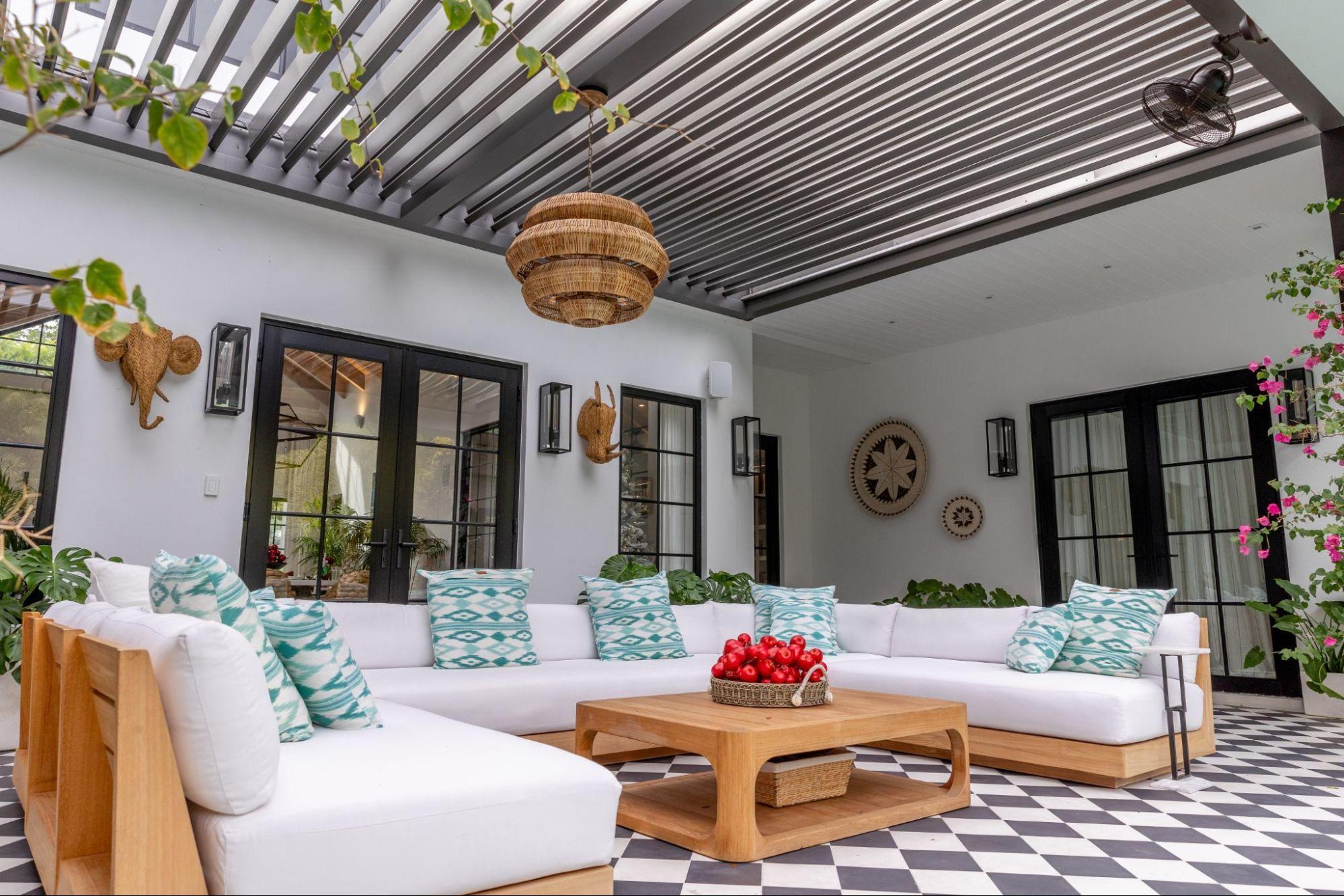
A refined example of this shift toward responsive residential architecture is the R-BLADE® motorized pergola system, which applies bioclimatic principles through a precisely engineered louvered roof. Rather than relying on fixed shading elements, the system allows real-time modulation of sunlight, ventilation, and weather protection, enabling outdoor spaces to adapt continuously to changing environmental conditions. By introducing controlled movement into the overhead plane, such systems transform pergolas into active architectural components, structures that participate in climate regulation rather than merely reacting to it.
Pergolas as Extensions of the Building Envelope
When placed adjacent to primary living spaces, pergolas can significantly influence interior performance. By shading windows and outdoor walls, they reduce heat gain before it reaches the building envelope. This strategy, external solar control rather than interior mitigation, is widely recognized as one of the most effective ways to improve thermal comfort and reduce cooling demand.
In residential applications, pergolas effectively act as external brise-soleil, but with the added benefit of spatial usability. Rather than being purely technical devices, they create livable zones that enhance the relationship between interior rooms and the landscape beyond.
Architects increasingly specify climate-adaptive pergola systems that operate as part of this extended envelope strategy, treating pergolas as integrated building systems rather than add-ons applied after the fact.
Material Performance and Longevity
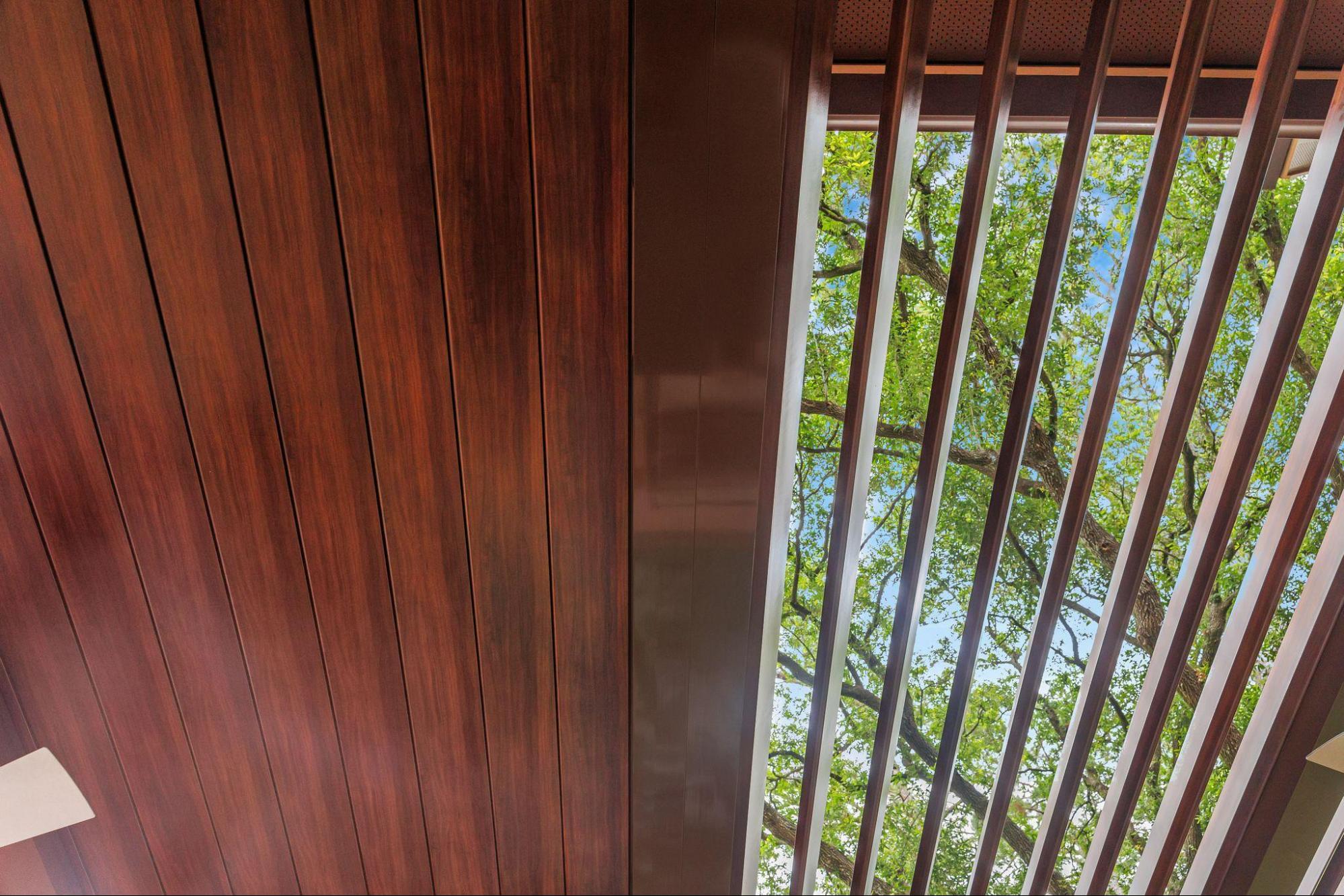
Material choice plays a critical role in determining whether pergolas function as architecture or decoration. Wood structures, while visually appealing, often struggle with long-term dimensional stability and maintenance requirements, particularly in climates with high humidity, intense sunlight, or significant temperature variation.
Contemporary aluminum pergola systems address these limitations through precision fabrication, structural consistency, and durability. Powder-coated finishes resist corrosion and fading, allowing the structure to maintain its architectural clarity over time. For residential projects prioritizing longevity and low maintenance, material performance becomes a sustainability consideration as much as an aesthetic one.
Durable systems reduce the need for replacement, refinishing, or resource-intensive upkeep, aligning pergola design with broader environmental responsibility.
Re-Defining the Outdoor Room
As homes become more compact and property footprints more constrained, outdoor space takes on increased importance. Pergolas help define outdoor rooms without enclosing them, creating areas that feel intentional and protected while remaining open to their surroundings.
These spaces support a range of domestic activities:
dining and gathering,
quiet retreat and relaxation,
informal work or reading areas,
transitional zones between pool, garden, and interior living spaces.
Crucially, the pergola establishes hierarchy and scale. It signals that the outdoor area is not leftover space, but a designed extension of the home’s program.
Integration Over Addition
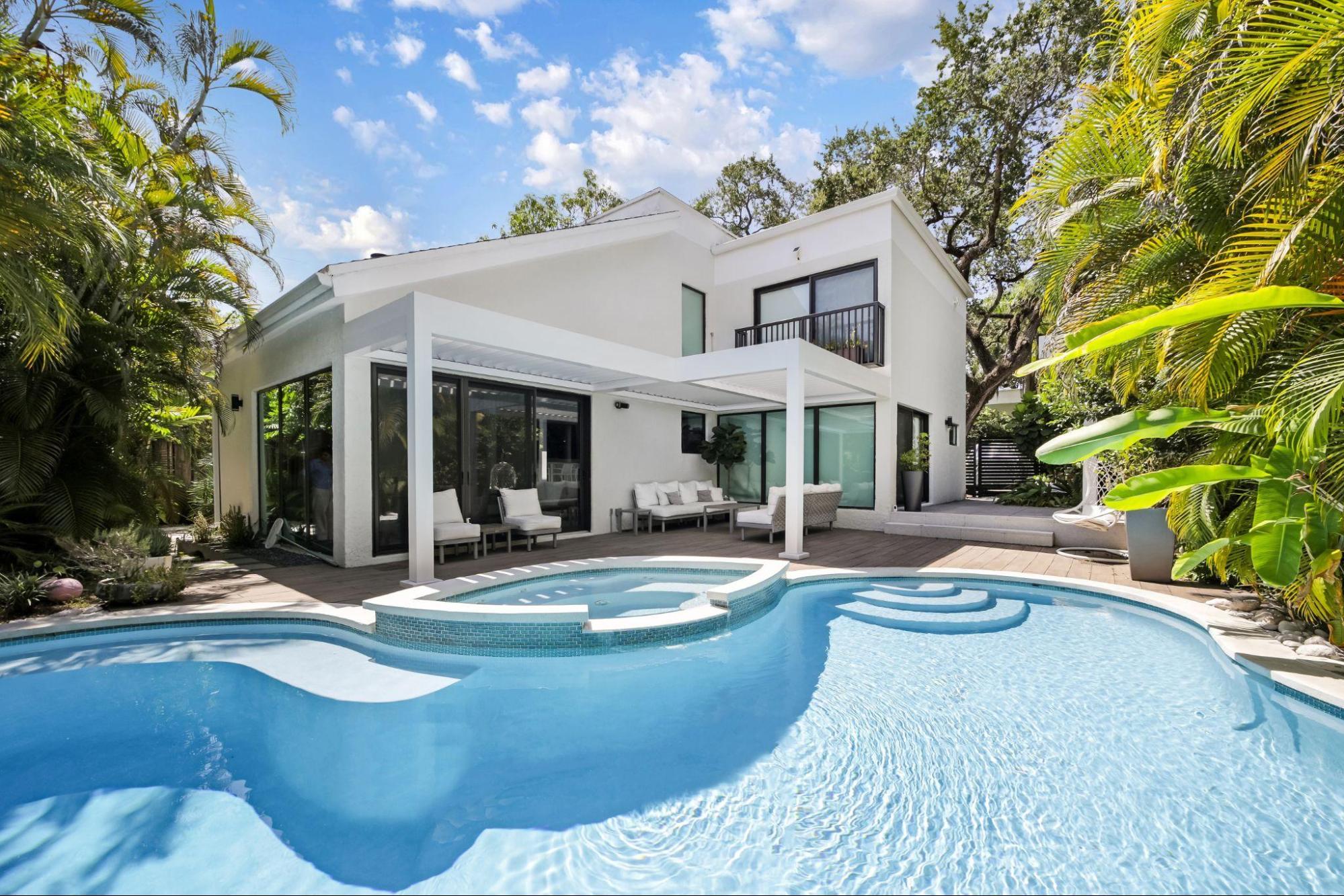
One of the defining characteristics of successful residential pergola design is integration. Pergolas that align with the home’s geometry, material palette, and proportions feel inevitable, almost as though they were always part of the original design.
This integration reinforces the home’s architectural identity rather than competing with it. Rooflines, column spacing, and structural rhythms can echo interior elements, creating continuity across thresholds. In this way, pergolas help dissolve the traditional boundary between indoor and outdoor architecture.
Toward Climate-Responsive Residential Design
As climate variability increases and expectations around outdoor living evolve, residential architecture must continue to adapt. Pergolas, once considered secondary features, are now emerging as key tools in this adaptation.
By combining environmental performance, spatial definition, and architectural clarity, contemporary pergola systems demonstrate how modest structures can deliver meaningful impact. They support passive comfort, enhance daily life, and contribute to a more nuanced understanding of what residential architecture can be.
In moving beyond the façade, pergolas invite architects and homeowners alike to think of the home not as a sealed object but as a layered environment that engages climate, landscape, and human use with equal intent.
More Stories
The Homeowner’s Guide to Eco-Friendly Pest Control Methods
Turning a Neglected Yard Into a Resort-Style Retreat Through Smart Design
Tenant-Friendly Renovations That Preserve Safety and Livability