
Walk through a neighborhood in Tokyo, a village in rural France, and a suburb outside Houston, and the buildings look nothing alike — not just aesthetically, but structurally. The materials, the framing systems, the wall thicknesses, and even the way roofs are pitched all tell a story about where that building was made and why. Residential construction is one of the few industries where local conditions still overpower global standardization, and understanding those differences matters whether you’re building, investing, or working in construction. The types of building construction that dominate in any given region didn’t emerge by accident — they reflect centuries of trial, error, and adaptation to climate, material availability, and cultural expectations.
North America: Wood Framing as the Default
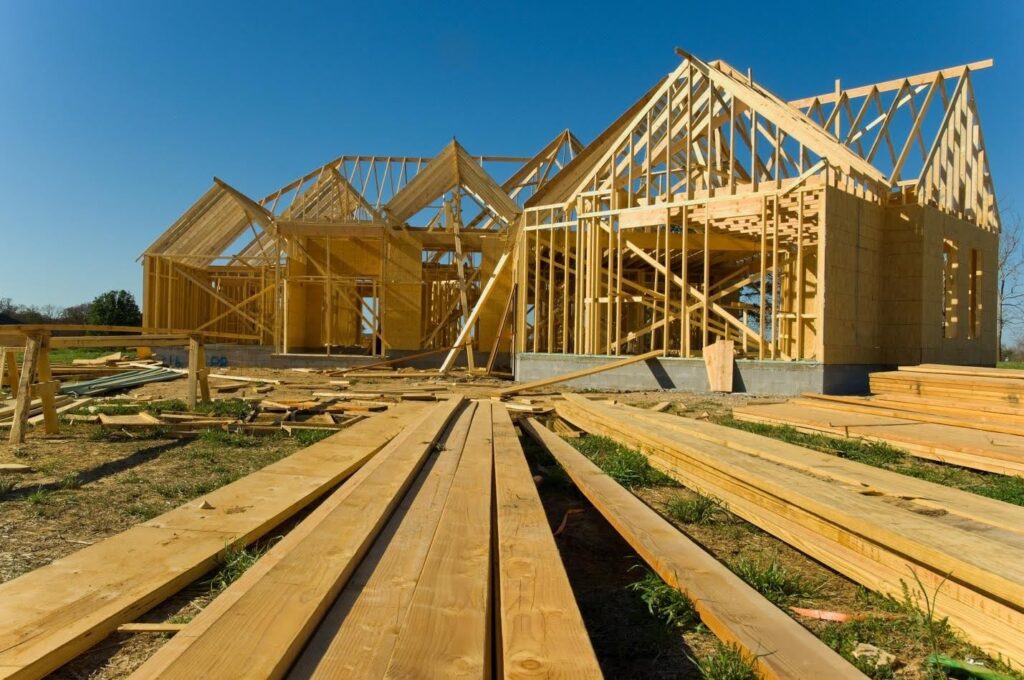
Timber-frame construction — specifically platform framing — is the backbone of residential building across the United States and Canada. It’s fast to erect, requires relatively common skills, and draws on a historically deep supply of softwood lumber. In most North American markets, a wood-frame home can be dried within days of breaking ground, which matters in regions with unpredictable weather windows.
The system works well for single-family homes but comes with known vulnerabilities: fire risk, susceptibility to moisture and rot, and pest damage from termites in warmer states. Building codes have evolved to address these risks through fire-rated assemblies and treated lumber requirements, but the underlying material limitations remain. In hurricane-prone coastal areas, engineered wood systems and reinforced connections have become standard, pushing the base framing system toward hybrid approaches.
Europe: Masonry, Concrete, and a Preference for Permanence
European residential construction skews heavily toward masonry and concrete block systems, particularly in Central and Southern Europe. In Germany, Austria, and much of Eastern Europe, solid brick or autoclaved aerated concrete (AAC) block construction is the norm for single-family homes. These materials offer superior thermal mass, fire resistance, and acoustic separation — qualities that matter in densely populated areas where homes share walls or sit close together.
The British Isles present an interesting middle ground: cavity wall construction using brick outer leaves with an insulated interior cavity has been standard for decades. This approach handles the damp Atlantic climate better than solid masonry, allowing moisture that penetrates the outer skin to drain away before reaching the interior. In Scandinavia, timber framing does appear, but it’s built to a higher insulation specification than its North American counterpart, driven by the demands of an extreme heating season.
Asia: Reinforced Concrete Dominates Urban and Rural Alike
Across much of Asia — Japan, South Korea, China, the Philippines, and beyond — reinforced concrete frame construction is the dominant residential building method, even for single-family homes. The logic is straightforward: seismic activity, typhoons, and high population density all argue for a structural system that can handle lateral loads, resist wind, and stack vertically when land is expensive.
In Japan specifically, seismic engineering has pushed residential construction toward highly engineered wood systems and light-gauge steel in addition to concrete, with strict code requirements that are among the most rigorous in the world. Rural Southeast Asia tells a different story — elevated timber structures on stilts remain common in flood-prone areas of Thailand, Vietnam, and Indonesia, where flood resilience and ventilation in humid climates trump the need for permanent foundations.
Why Climate and Culture Shape Construction More Than Cost Alone
It’s tempting to reduce these differences to economics, but material cost is rarely the whole explanation. Building traditions carry significant cultural weight. In many parts of the Middle East and North Africa, load-bearing masonry and concrete construction dominate not just because of the hot, dry climate, but because permanence and solidity carry social meaning — a concrete home signals stability and long-term investment in a way that a wood-frame structure doesn’t.
Climate does the heavy lifting in most technical decisions, though:
- High seismic zones push builders toward reinforced concrete or engineered timber
- Humid tropical climates favor elevated structures with natural ventilation
- Extreme cold demands high insulation values and airtight envelopes
- Arid regions prioritize thermal mass to moderate daily temperature swings
The residential construction industry is more globally connected than ever, with materials, methods, and building science crossing borders regularly. But the houses people build still reflect where they live and what they’ve learned works — often over generations of hard experience.
More Stories
Planning Plumbing Access Before Closing Walls in a Renovation
How to Read a Cabinet Spec Sheet: A Term-by-Term Translation
Why Compact Homes Are Growing in Popularity