
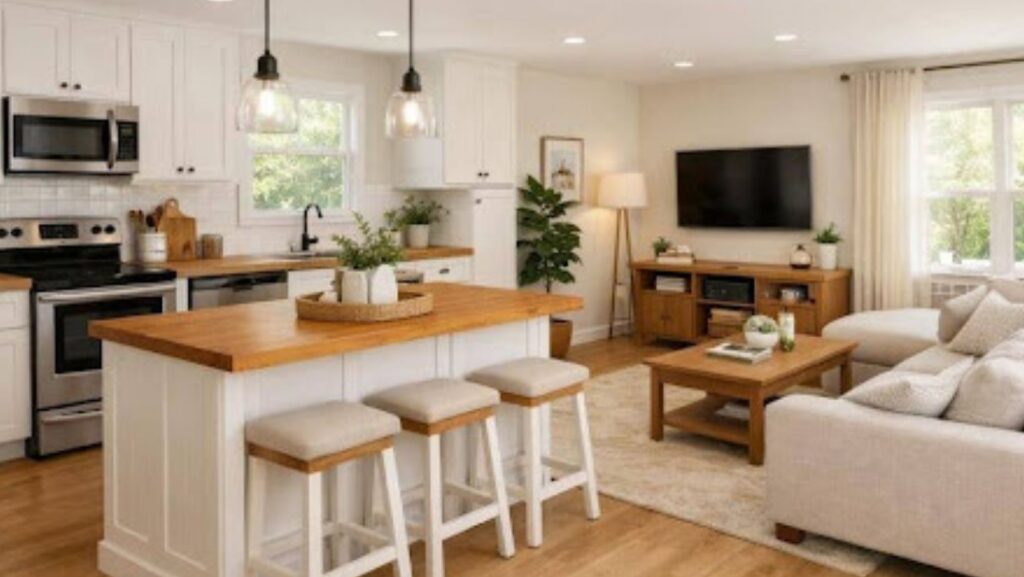
Creating an open-plan kitchen and living area can make your home feel brighter, larger, and easier to live in. But a successful remodel is not about knocking down a wall and hoping everything comes together. The best spaces feel connected because every detail supports how you move, cook, relax, and gather.
After working on homes across Atlanta, I’ve learned that budget-friendly open layouts work best when you focus on the basics first: structure, layout, flooring, lighting, and material flow. In one Decatur ranch renovation, we opened what appeared to be a simple dividing wall and found outdated wiring, an old vent stack, and termite damage. That experience changed how I approach every open-concept project.
Whether you live in a bungalow in Buckhead, a ranch in Decatur, or a newer home in Alpharetta, these same principles can help you create a connected space without overspending.
Key Takeaways
- Use one main flooring material across both spaces to create better flow.
- Confirm structural and utility needs before demolition.
- Use layered lighting to define each zone naturally.
- Keep your material palette simple and consistent.
- Tackle upgrades in phases if needed.
- Choose materials that can handle Atlanta’s humidity and seasonal changes.
Start With Structure and Layout
Know What You’re Removing Before Demo
Before taking down a wall, find out exactly what it supports. Older Atlanta homes often have hidden framing surprises, aging electrical work, or plumbing routed through unexpected places.
A structural inspection may feel like an added expense, but it can save thousands in repairs later. If a wall is load-bearing, hire a licensed contractor to handle beam and support work.
Handle Electrical and Plumbing First
If you are changing your kitchen layout, rough-in work should come before finishes.
Plan for appliance circuits, island outlets, range hood venting, switch placement, and any plumbing needed for sinks or dishwashers.
Making these changes after drywall and flooring are installed usually leads to delays and extra cost. If you are planning a larger renovation, following the right order to remodel a kitchen can help you avoid delays, extra labor, and costly rework.
Use Flooring to Create Flow
Choose One Flooring Material Across Both Zones
One of the simplest ways to make a shared space feel intentional is to use continuous flooring.
When your eye moves across one uninterrupted surface, the room feels larger and calmer.
For Atlanta homes, luxury vinyl plank is often the best value. It handles humidity well, works over slightly uneven subfloors, and costs less than hardwood. Mid-range LVP usually runs around $4 to $8 per square foot installed, depending on prep work.
Engineered hardwood is another strong option if you want a warmer, higher-end look.
Minimize Visual Breaks
Tile can work well in the kitchen, but large flooring changes often make open spaces feel choppy.
If you want tile, use it in smaller areas, such as behind a coffee station, in a pantry, or as a backsplash.
Keep the flooring in the main living area consistent whenever possible.
Create a Cohesive Material Palette
Keep Colors and Finishes Related
You do not need everything to match exactly. You need materials that feel like they belong together.
A simple approach is to choose one main wall color, one repeated accent tone, and one grounding wood or floor tone.
This keeps the space feeling balanced instead of busy.
Match Undertones
This is where many DIY remodels fall apart. Warm woods, cool grays, and mismatched finishes can make the room feel disconnected.
For example:
- Warm oak cabinets pair well with cream, beige, and soft brass accents
- Cooler walnut or espresso tones work better with charcoal, black, and crisp white finishes
Before buying fixtures or furniture, compare samples in the actual room so form can meet function.
Use Lighting to Define Each Zone
Layer Light Instead of Relying on One Fixture
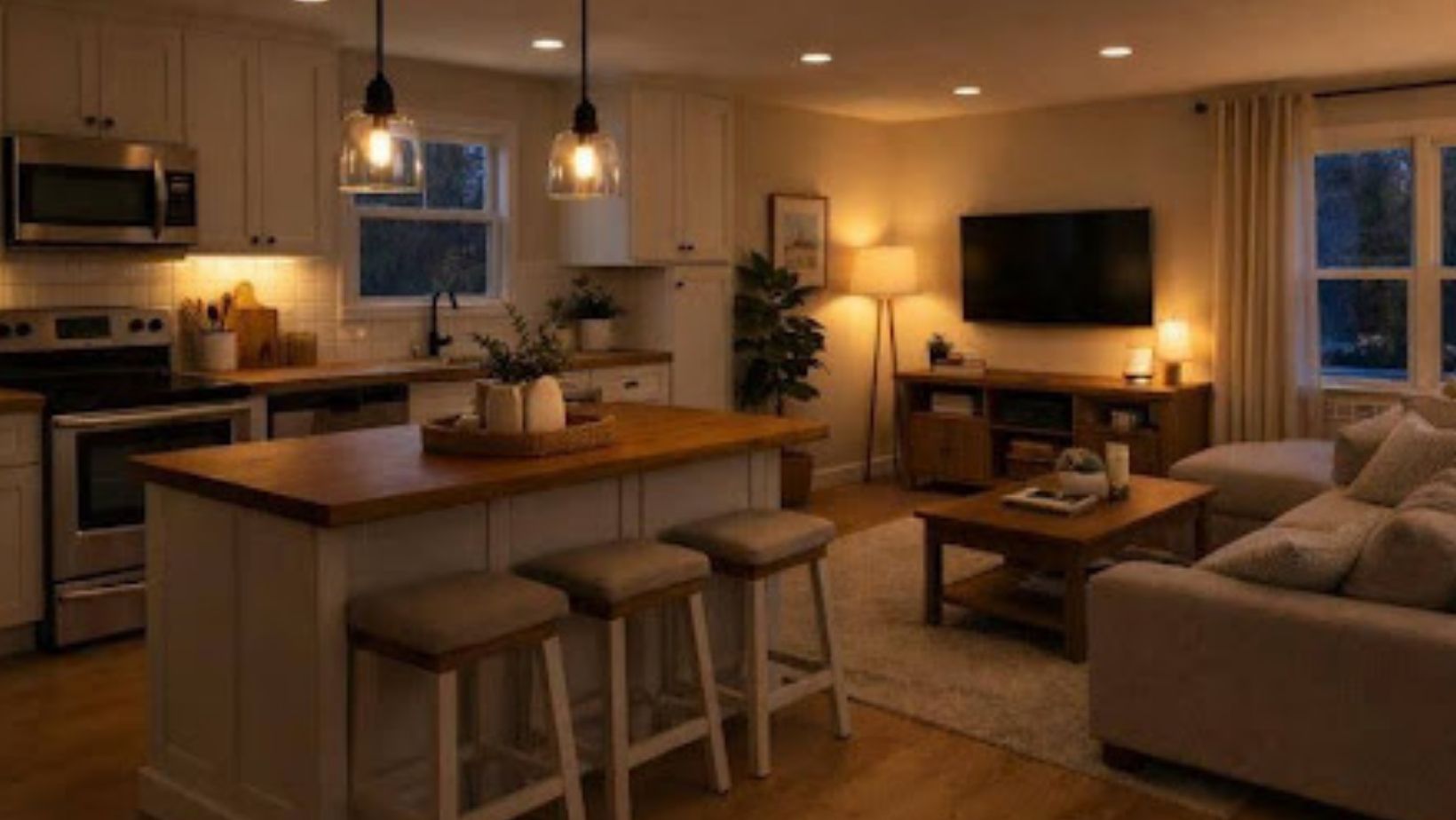
Lighting often has the biggest impact on how an open layout feels.
A single ceiling light in the center of the room is not enough. Use layers instead: task lighting in the kitchen, especially under-cabinet LEDs; ambient lighting in the living area through lamps or recessed lights; and accent lighting above an island or dining space.
Separate switches for each zone make the room feel more flexible.
Use Fixtures to Create Natural Boundaries
Pendant lights over an island or peninsula help visually anchor the kitchen without closing off the space.
They also add warmth and make the room feel more finished.
Define Spaces Without Closing Them Off
Use Furniture and Rugs to Create Zones
You do not need walls or dividers to make the layout feel organized.
Instead, float the sofa with its back toward the kitchen, use a large rug to ground the seating area, keep walkways open, and avoid blocking sight lines.
When furniture placement feels intentional, the whole room feels easier to use.
Add an Island or Peninsula if Possible
An island can make a huge difference in a shared layout.
It adds prep space, storage, seating, and a natural transition point between the kitchen and living area.
One simple island I built using stock cabinets and a butcher block top came in under $500 and completely improved how the space functioned.
Atlanta-Specific Considerations
Atlanta’s climate affects renovation choices more than many homeowners expect.
In humid summers, lower-grade laminate can swell or buckle, especially near patio doors or windows with strong afternoon sun. In homes around Virginia-Highland and Grant Park, I’ve seen flooring issues show up within a year when cheaper materials were used.
Materials that usually hold up best include LVP, engineered hardwood, moisture-resistant paint, and durable cabinet finishes.
Since appliances are more visible in an open layout, it is also worth making sure your refrigerator is working efficiently before finishing the remodel. If it is noisy, leaking, or struggling to keep temperature, taking care of refrigerator repair in Atlanta early can help you avoid disruptions once the space is complete.
Older neighborhoods may need more structural updates, while newer homes often benefit more from lighting, finish, and layout improvements.
Smart Budget Tips
Work in Phases
A good remodel does not have to happen all at once.
A realistic sequence is to open the layout and handle structural work first, update flooring next, improve lighting after that, and add storage or built-ins later as your budget allows.
This helps spread out costs and keeps the project manageable.
Set Aside a Buffer
Always keep 10% to 15% of your budget reserved for surprises.
Especially in older homes, opening walls can reveal wiring problems, plumbing leaks, water damage, or pest issues.
That buffer helps you keep moving without sacrificing quality.
Frequently Asked Questions
How much does it cost to open up a kitchen into a living room on a budget?
If the wall is not load-bearing, basic demo and patching may cost under $500 in materials. Structural changes can range from $1,500 to $4,000 or more, depending on labor and beam span.
Do I need a permit to remove a wall in Atlanta?
In most cases, yes. Structural changes usually require permits. Check with your local building department before starting.
What flooring works best in an open layout in Atlanta?
Luxury vinyl plank is usually the most budget-friendly and durable option. Engineered hardwood is a strong upgrade for a more finished look.
How can I make the space feel connected without redoing everything?
Focus on flooring consistency, shared tones, coordinated finishes, and better lighting.
Can I build a kitchen island myself?
Yes. A DIY island using stock cabinets and a prefab countertop is one of the most affordable high-impact upgrades.
Creating a Space That Feels Connected
A cohesive open-plan kitchen and living area does not come from expensive finishes. It comes from thoughtful decisions that support how you actually live in the space.
The biggest improvements usually come from getting the basics right: sound structure, continuous flooring, layered lighting, and consistent materials.
Take your time, make decisions with the whole room in mind, and focus on function as much as appearance. That is what makes a space feel like it was always meant to be that way.
More Stories
Planning Plumbing Access Before Closing Walls in a Renovation
How to Read a Cabinet Spec Sheet: A Term-by-Term Translation
Why Compact Homes Are Growing in Popularity