
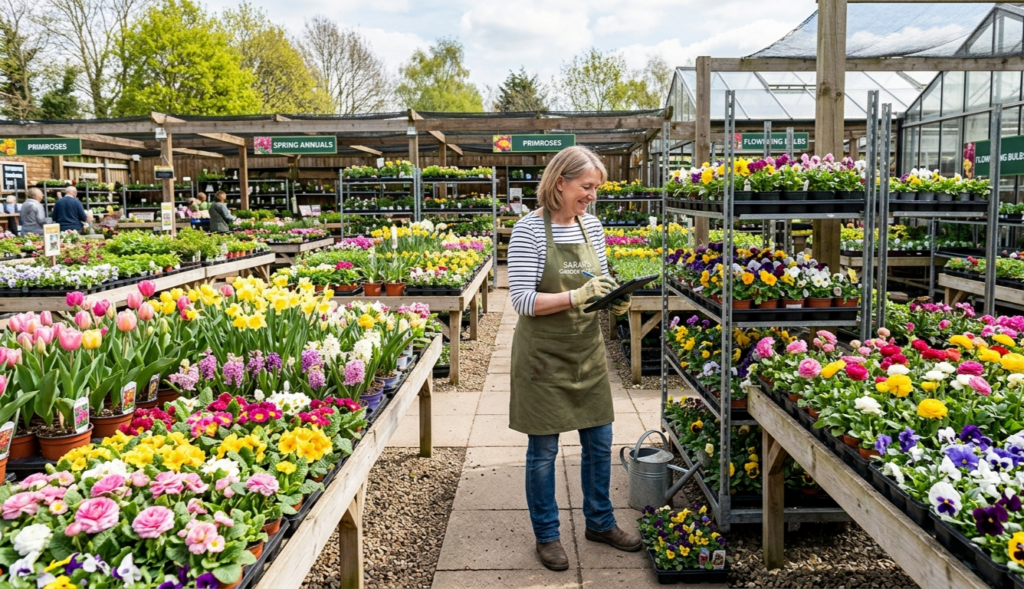
Running a garden center means riding the waves of the seasons. Spring brings packed parking lots and overflowing benches of annuals.
Winter brings quiet and risk. For garden center owners, seasonal inventory swings create real financial exposure that standard business insurance often doesn’t cover well. Here’s what you need to know to protect what you’ve built.
Why Seasonal Inventory Makes Garden Centers Uniquely Vulnerable
Most retail businesses carry consistent stock year-round. Garden centers don’t.
Your inventory value in April can be five to ten times what it is in November. That gap matters enormously when something goes wrong.
A late frost, a burst pipe, or a hailstorm can wipe out tens of thousands of dollars in plants overnight, and a policy with a fixed coverage limit might leave you badly underinsured when it happens most.
So the first question every garden center owner should ask is: Does my policy reflect my peak inventory value, not my average?
| Note: Seasonal inventory swings are one of the biggest insurance blind spots for garden centers. Policies with fixed coverage limits often undervalue stock at peak season. Make sure your coverage scales with your busiest months. |
Understanding What “Inventory” Means for Garden Centers
Plant stock is not like a shelf of canned goods. It’s alive, perishable, and sensitive to conditions you can’t always control.
Insurance carriers treat live goods differently from hard goods like tools, pots, and fertilizer.
Some policies exclude plants entirely from property coverage. Others cover them only under specific conditions, like damage from a named storm, but not from disease or a temperature failure in your greenhouse.
Before you assume you’re covered, pull out your current policy and look for:
- Whether live plants are explicitly listed as covered property
- Any exclusions for “perishable goods” or “growing crops.”
- Whether greenhouse structures are covered separately from their contents
- How the policy handles equipment breakdown (refrigeration units, heating systems)
That last point catches many owners off guard. If your greenhouse heating system fails on a February night and you lose $30,000 in overwintered stock, equipment breakdown coverage is what pays, not general property insurance.
Seasonal Inventory Fluctuation Coverage: How It Works
Standard property insurance uses a fixed coverage limit. You pick a number, pay premiums based on it, and that’s your ceiling.
The problem for garden centers is that a limit set for December is dangerously low in May.
A better approach is a policy structured around peak season values. Some insurers offer what’s called “seasonal automatic increase” provisions, where coverage limits adjust upward during predetermined months without requiring you to call and update the policy manually.
Others allow you to schedule inventory value changes throughout the year. It takes a conversation with a knowledgeable broker, but the difference in protection is significant.
It’s worth exploring Insurance for garden center workers through specialty providers who understand the agricultural and horticultural business model.
| Must Read: Fixed coverage limits don’t work well for garden centers with seasonal stock swings. Look for policies with seasonal adjustment provisions or work with a specialty insurer who can structure coverage around your peak inventory months. |
Garden Center Insurance Coverage Types Worth Knowing
Beyond inventory, a complete insurance program for garden centers typically includes several layers.
Property insurance covers your physical assets, structures, equipment, signage, and (if written correctly) your plant stock.
General liability protects you if a customer slips on wet pavement, gets injured by a falling display, or claims a plant you sold damaged their property. Garden centers have significant foot traffic, which means more exposure.
Commercial auto matters if you deliver plants, run a landscape service, or use vehicles to transport stock between locations.
Business interruption insurance replaces lost income if a covered event forces you to close temporarily. For a garden center hit by a spring storm right before Mother’s Day weekend, this coverage can be the difference between surviving the season and not.
Inland marine insurance covers plants and equipment while in transit, useful if you’re moving stock between a nursery and a retail location.
Common Mistakes Garden Center Owners Make With Insurance
Underreporting peak inventory value: Many owners base their coverage on their average inventory, not their peak. Set your limits based on your highest-value month.
Ignoring equipment breakdown coverage: Heating systems, irrigation controls, and cooling units are all failure points. A breakdown during a critical growing period can cost far more than the repair itself.
Skipping a policy review after expansion: Added a greenhouse? Expanded your retail area? Launched delivery? Each change creates new exposure. Review your policy annually, and after any significant business change.
Assuming a general business policy is enough: Garden centers sit at the intersection of retail, agriculture, and sometimes landscaping services. A generic BOP (Business Owner’s Policy) written for a hardware store or boutique won’t account for the specific risks you carry.
| Must Read: The most common insurance mistakes for garden centers come down to undervaluing peak inventory, overlooking equipment coverage, and relying on generic policies not built for horticultural businesses. |
FAQs
Are live plants covered under standard property insurance?
Not always. Many standard property policies exclude or limit coverage for live plants and perishable goods. You need to confirm explicitly with your insurer that live inventory is covered, and under what conditions. Specialty garden center policies are often more reliable here.
What happens if my greenhouse heating fails and I lose my plants?
This falls under equipment breakdown coverage, not general property insurance. Without it, you’d likely bear the full cost of the lost inventory. Equipment breakdown coverage is a separate add-on worth having for any climate-controlled growing space.
How do I make sure I’m not underinsured during peak season?
Talk to your broker about seasonal automatic increase provisions or scheduled coverage adjustments. Set your policy limits based on your highest-value month, not your average. Reassess annually as your business grows.
Does general liability cover customer injuries at my garden center?
Yes, general liability typically covers bodily injury claims from customers on your property. Given the uneven terrain, wet surfaces, and heavy displays common in garden centers, this coverage is something you should carry at meaningful limits.
More Stories
FlyArchitecturee.net: Modern Architecture Portfolio, Services, And Why Clients Choose Us (2026)
Exploring FlyArchitecture.net Outside: Inspiring Exterior Design, Materials, And Site Ideas (2026 Guide)
Farchitecfly Smart Facade: How Golden Honeycomb Decals Transform Buildings In 2026