
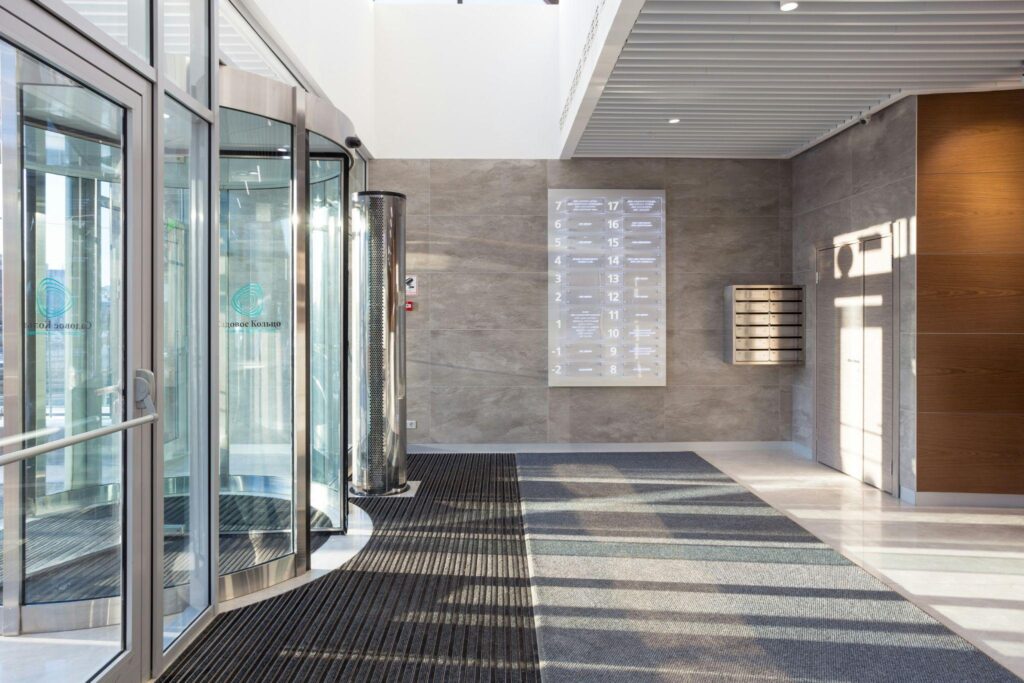
Access control integration for office entrance doors lets a business manage exactly who can enter specific zones using existing credentials such as proximity cards or key fobs, rather than relying on a receptionist or a simple lock to control movement through the building. Automatic office doors fitted with electromechanical locking mechanisms can integrate with a building’s existing access control platform, giving facilities managers oversight of movement without replacing existing systems. A specialist such as Dasco Entrance Technology designs entrance systems specifically to integrate with this kind of infrastructure rather than operating as a standalone product.
Why Simple Locks Fall Short in a Modern Office
A simple mechanical lock offers limited flexibility once an office grows beyond a handful of staff, since managing physical keys across departments, contractors, and visitors becomes increasingly difficult to track and secure. Lost keys require expensive lock changes, and there is no straightforward way to see who entered a space or when. Modern offices handling sensitive data or valuable equipment need a system that can grant, restrict, and log access without the operational burden that physical keys create as an organisation scales.
How Electromechanical Locking Connects to Existing Systems
Automatic office doors fitted with electromechanical locking mechanisms can connect to an existing access control platform, allowing entry to be granted through the same proximity cards, key fobs, or keypads already issued to staff. This integration means a business does not need to replace an access control system already in place simply to upgrade its entrance doors. The door manufacturer typically does not supply the access control components themselves but engineers the door hardware to work with whatever credential method the building already uses.
Managing Access to Restricted Zones
Restricted zones such as private offices, meeting rooms, storage rooms, and data centre rooms benefit from doors that can be limited to authorised personnel only, tracked through the same access control platform used at the main entrance. Steel security doors are commonly specified for these internal zones, available in different protection grades depending on the sensitivity of what is being safeguarded. Integrating these internal doors with the same credential system as the main entrance gives a business a single, coherent security layer rather than a patchwork of separate arrangements.
Balancing Security With Everyday Convenience
Security and everyday convenience often pull in opposite directions, since the most secure system is rarely the most convenient one for staff moving through a building dozens of times a day. Automatic doors integrated with access control solve much of this tension by letting authorised staff move through hands-free using a credential they already carry, without needing to physically unlock anything. This keeps a building secure against unauthorised entry while avoiding the friction of manual locks that slow down legitimate staff and visitors during a normal working day.
Hygiene Benefits of Hands-Free Entry
Hands-free automatic doors reduce surface contact throughout a building, which has become a more prominent consideration for shared office spaces and public buildings where hygiene matters to staff and visitors alike. Motion detectors fitted as standard on automatic door types mean staff do not need to touch handles or push plates to move between zones, reducing one of the more frequent points of contact in a busy office environment. This benefit sits alongside the security advantages rather than replacing them, giving a business two separate reasons to specify automatic entrance systems.
Compliance Considerations for Office Entrances
Office entrance doors need to satisfy the Equality Act 2010 alongside BS EN 16005 safety standards for any automatic system, ensuring the entrance remains accessible to all users, including wheelchair users while operating safely for everyone passing through. Compliance is not simply a legal checkbox, since a poorly specified automatic door can create genuine safety or accessibility problems in daily use. Working with a specifier familiar with both the regulatory requirements and access control integration helps ensure the finished entrance satisfies every relevant obligation rather than only the most visible ones.
Building Security Into the Entrance Itself
Integrating access control into an office entrance door turns the entrance itself into part of the building security infrastructure, rather than treating the door as a separate, purely physical barrier. Specifying this kind of system alongside an existing access control platform gives a business tighter oversight of who moves where, without the operational headache of managing physical keys across a growing organisation.
More Stories
How To Contact The FlyArchitecture Crew: A Practical Guide For 2026
Relief Carving vs Chip Carving: Which Style Should You Learn First
Why Building Rules Matter When Moving Into a Vancouver Condo