
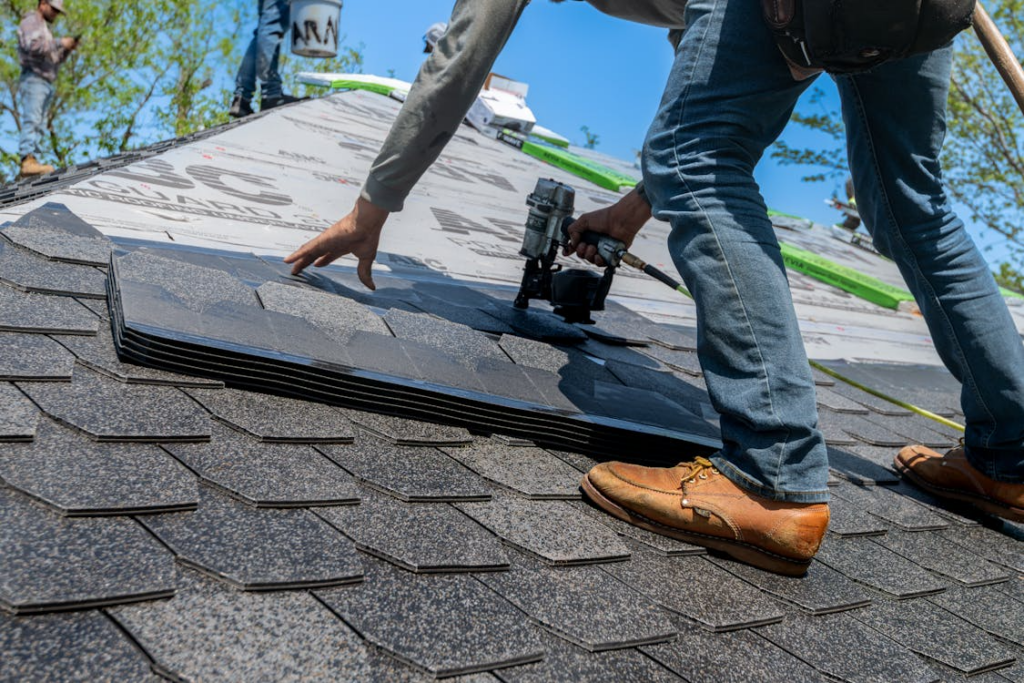
Is your roof quietly costing you thousands of dollars?
Most people never give their roof a second thought until something goes wrong. A leak. Missing shingles. Unexplained stains on the ceiling. By the time you notice, the damage has already extended farther than you think.
Here’s the thing…
Your roof doesn’t just need professional services when disaster strikes. Scheduled inspections & preventative maintenance will safeguard your home’s largest investment. Yours. At a fraction of the cost of replacement.
Roof repair and replacement costs reached almost $31 billion in 2024. That’s a 30% increase over 2022. Damage to roofs now make up more than 25% of all residential insurance claim value in 2024.
Don’t become part of those statistics.
Partnering with experienced residential roofing specialists is the best way to prevent problems, protect the integrity of your home and prevent costly repairs.
Here’s what you’ll uncover:
- What Are Residential Roofing Services?
- Why Regular Roof Inspections Matter
- The Complete Roof Inspection Process
- Common Residential Roof Repairs
- When To Repair vs. Replace Your Roof
- How To Choose The Right Roofing Contractor
What Are Residential Roofing Services?
Residential roofing services cover everything from routine inspections through to full replacements.
These maintenance services help ensure your roof works optimally for the full life of your home. Standard service includes:
- Roof inspections — identifying damage, wear, and potential problem areas before they escalate
- Repairs — replacing damaged shingles, sealing flashing, and fixing leaks
- Replacement — a full tear-off and installation of a new roof system
- Maintenance — clearing gutters, applying sealants, and treating moss or algae growth
Here’s something most homeowners don’t realise…
About 80% of homes in the United States have asphalt shingles. Asphalt shingles are by far the most common type of roofing material — and the most common type to need repairs. Understanding what residential roofing services entail allows you to know exactly what to look for.
Why Regular Roof Inspections Matter
Ignoring a roof is a lot like ignoring a slow leak in a tyre.
It may appear okay now. However, the longer you wait to fix it, the more costly it becomes.
Roofing professionals advise inspecting your roof twice a year – Spring and Fall – and after severe weather events. Roofs that are older than 20 years are at a higher risk. They are 3x more likely to have a wind or hail claim than a newer roof.
The benefits of routine inspections are clear:
- Catch small problems before they become major structural repairs
- Extend the lifespan of an existing roof by years
- Protect the home’s interior from water and moisture damage
- Maintain a clean insurance claims history
- Preserve and increase the property’s resale value
Simple enough. Plus it costs a lot less to have an inspection then the price of damage you don’t know about.
The Complete Roof Inspection Process
A thorough residential roofing inspection covers two core areas — exterior and interior.
Exterior Inspection
This is where the most visible damage shows up. A qualified roofer will check:
- Shingles — check for cracks, curling, missing or loss of granules (wear due to age)
- Flashing — strips of metal around chimneys, vents and skylights used to seal the most leak prone joints on any roof
- Gutters — look for sagging, clogs or granule accumulation (definite sign of wearing shingles)
- Ridge and valleys — roof areas of high stress where two planes intersect and water tends to pool during periods of heavy rainfall
Interior Inspection
What happens on the inside tells an equally important story:
- Attic ventilation — poor airflow accelerates roof deterioration from the inside out
- Insulation condition — wet or compressed insulation signals an active slow leak
- Structural integrity — sagging deck boards or rafters indicate water damage accumulating underneath
A professional will record every issue and provide you with an accurate report detailing what needs to be done and the priority level.
Common Residential Roof Repairs
Not every roofing issue needs a full replacement.
The majority of issues can be classified under one of a few typical scenarios that an experienced contractor will take care of promptly:
- Shingle replacement — damaged or missing shingles are the most frequent repair job
- Flashing repair — loose or corroded flashing causes the majority of roof leaks
- Gutter reattachment — detached gutters cause water pooling and fascia rot
- Skylight resealing — skylights are notorious leak points when sealant breaks down
- Flat roof patching — particularly relevant for extensions or lower-pitch roof sections
The cost varies depending on job size and materials used.
The important lesson here is that intervening early is almost always MUCH cheaper than waiting.
When To Repair vs. Replace Your Roof
This is the question every homeowner eventually faces.
Here’s a simple way to think about it…
Repair is the right call when:
- The roof is under 15 to 20 years old
- Damage is isolated to one specific section
- Less than 30% of the total roof surface is affected
- The underlying decking and rafters are structurally sound
Replacement makes more sense when:
- The roof has passed its expected service life
- The same areas have been repaired multiple times
- Storm or weather damage is widespread across the roof
- Rising energy bills suggest the roof insulation or ventilation has broken down
A professional contractor will go over both scenarios with you and guide you towards the best decision for your home. A reputable contractor will provide you with an honest opinion, not just the most money-making one.
How To Choose The Right Roofing Contractor
Hiring the wrong contractor can prove to be one of the most costly roofing mistakes homeowners make.
Here’s what to look for:
- Licensing and insurance — always verify both. No exceptions
- Local experience — having a contractor that is familiar with local weather and building codes can be priceless
- Written quotes — never accept verbal agreements on roofing work
- Reviews and references — read them and see how the contractor deals with negative comments
- Warranty — look for coverage on both materials and workmanship
Don’t rush this decision. The roof protects everything under it.
Everything You Need To Know, Wrapped Up
Residential roofing services are not a luxury — they are a necessity.
A good roof keeps your home protected, saves you money on energy costs and adds real value to your home. The majority of major problems begin as small problems that are 100% preventable.
Here’s the quick recap:
- Schedule a professional inspection at least 2x per year
- Address small repairs before they develop into structural problems
- Know the clear difference between repair and replacement
- Choose only a licensed, insured, and locally experienced contractor
- Don’t wait for a leak to confirm there’s a problem
Ideally, your roof should have been inspected last year. The next best time is right now.
More Stories
Farchitecfly Smart Facade: How Golden Honeycomb Decals Transform Buildings In 2026
Fly Architecture Outside The Home: Modern Curb Appeal And Practical Design Ideas For 2026
FlyArchitecture Fencing Costs Explained: Average Prices, Materials, And How To Save (2026)